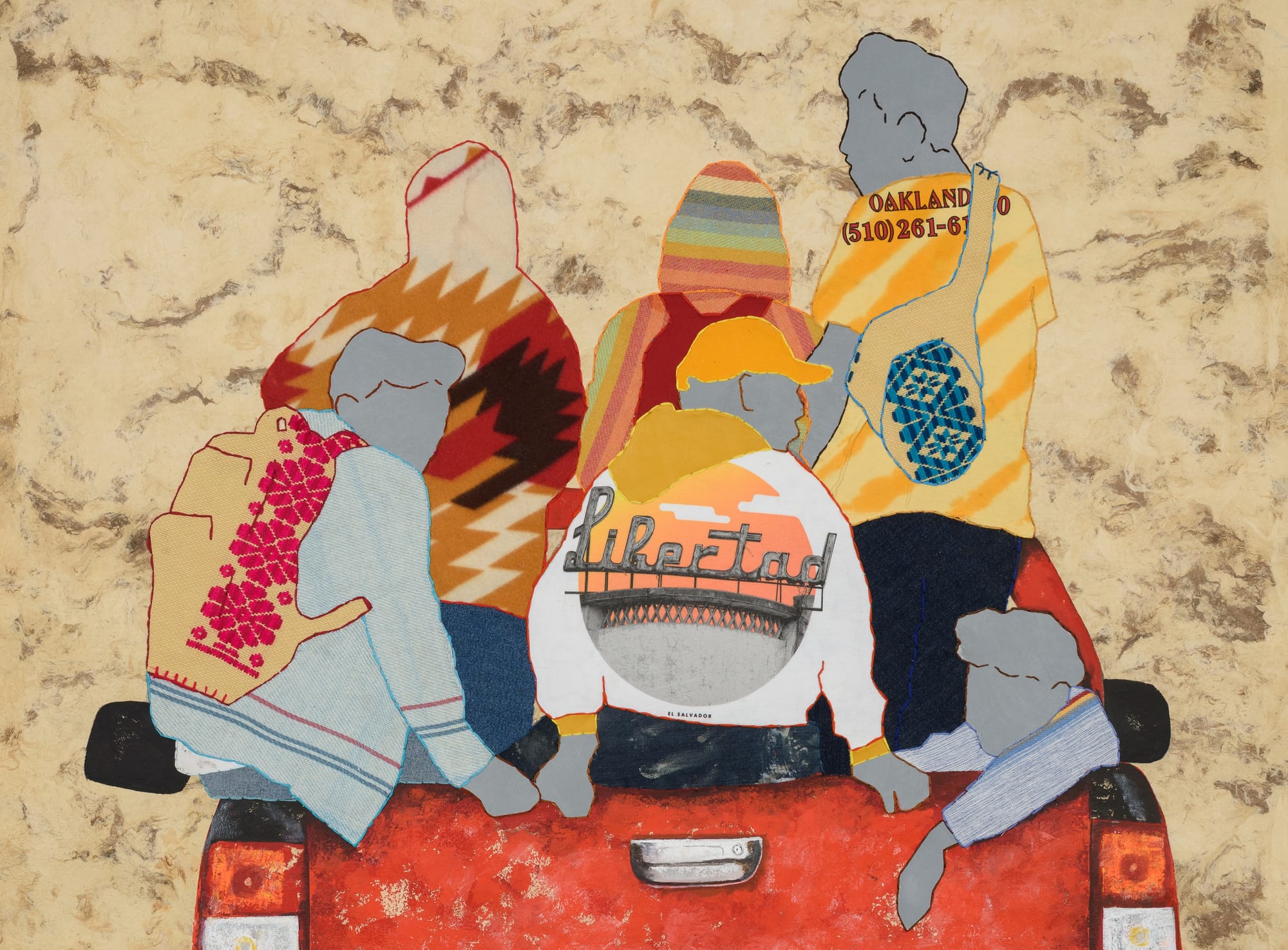
Arleene Correa Valencia, a DACA artist, channels the precarity of undocumented life into fiber work that refuses sentimentality. She stitches embroidery onto bark paper, creating pieces that hold immigration stories with the same care most people reserve for heirlooms. The work moves past the political talking points that dominate the conversation around immigration. Instead, it sits in the tender space where identity and belonging intersect.
Valencia's practice transforms humble materials into something that demands attention. Bark paper, embroidery thread, and careful hands become the language for articulating what it means to exist in legal limbo in a country you call home. The work doesn't argue. It witnesses.
What makes this matter now: Artists like Valencia are reclaiming the narrative around DACA, moving it from policy debate into the realm of emotional and aesthetic truth. The thread work becomes metaphor and literal act simultaneously. You're witnessing someone stitch herself and her community into visibility, one careful loop at a time.