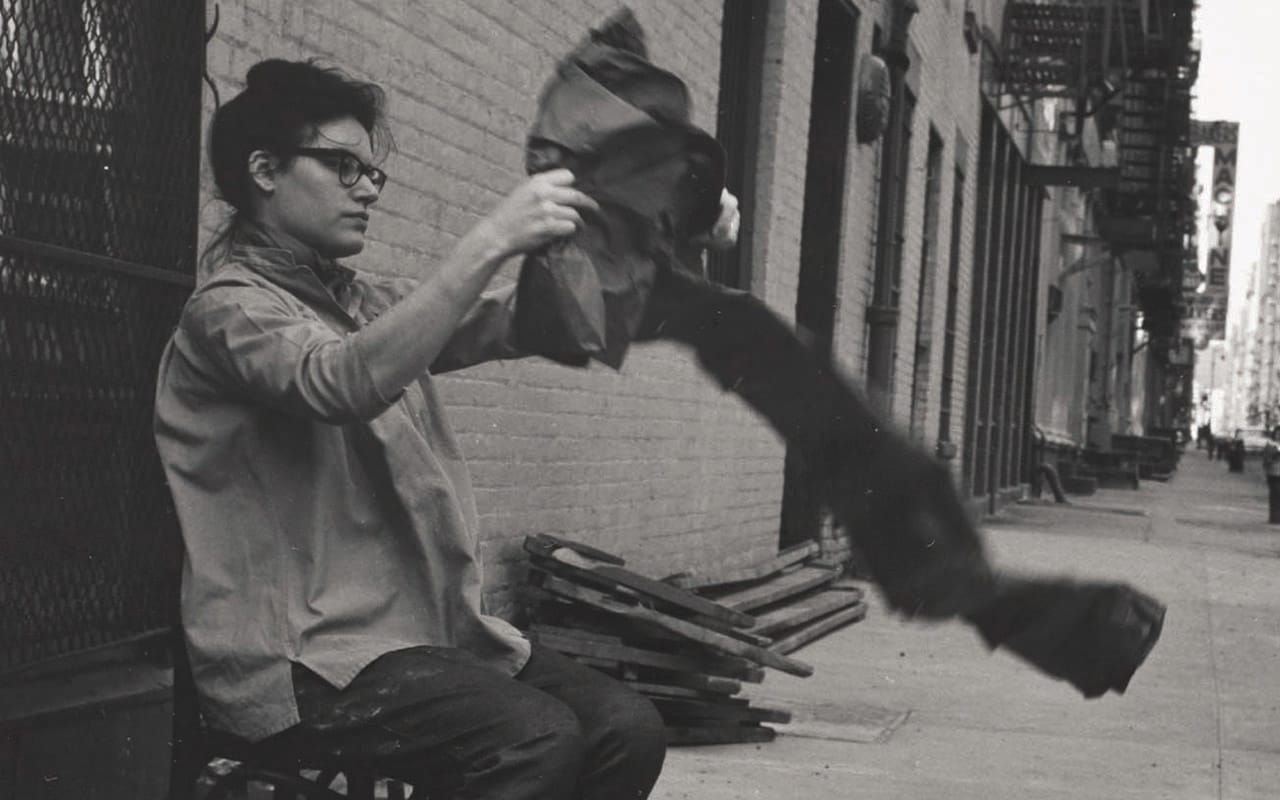
Alison Knowles remains an enigma. The Fluxus artist shaped experimental performance, sound, and visual art for decades, yet her personal life stubbornly resists documentation. Now a major biography by a leading Fluxus scholar exists. It still doesn't crack her open.
Knowles worked across mediums that resist traditional archiving. Her event scores, mail art, and performances left traces but not answers. She collaborated with John Cage and other giants of the avant-garde, yet maintained a privacy that contemporary artists rarely manage. The biography catalogues her work, her influence, her place in art history. What it cannot do is explain her inner life, her motivations, her reasoning.
This gap feels telling. Fluxus itself prized ephemerality and anti-commercialism. Its artists often worked against the machinery that preserves and markets. Knowles embodied this ethos so thoroughly that even scholarship struggles to penetrate it. The more experts write about her, the more she recedes.
That resistance to visibility, that refusal to be fully known, may be the point. Knowles made art about process and participation, not revelation. A biography that fails to fully explain her works precisely because she resists full explanation becomes its own kind of Fluxus piece, accidental though it may be.