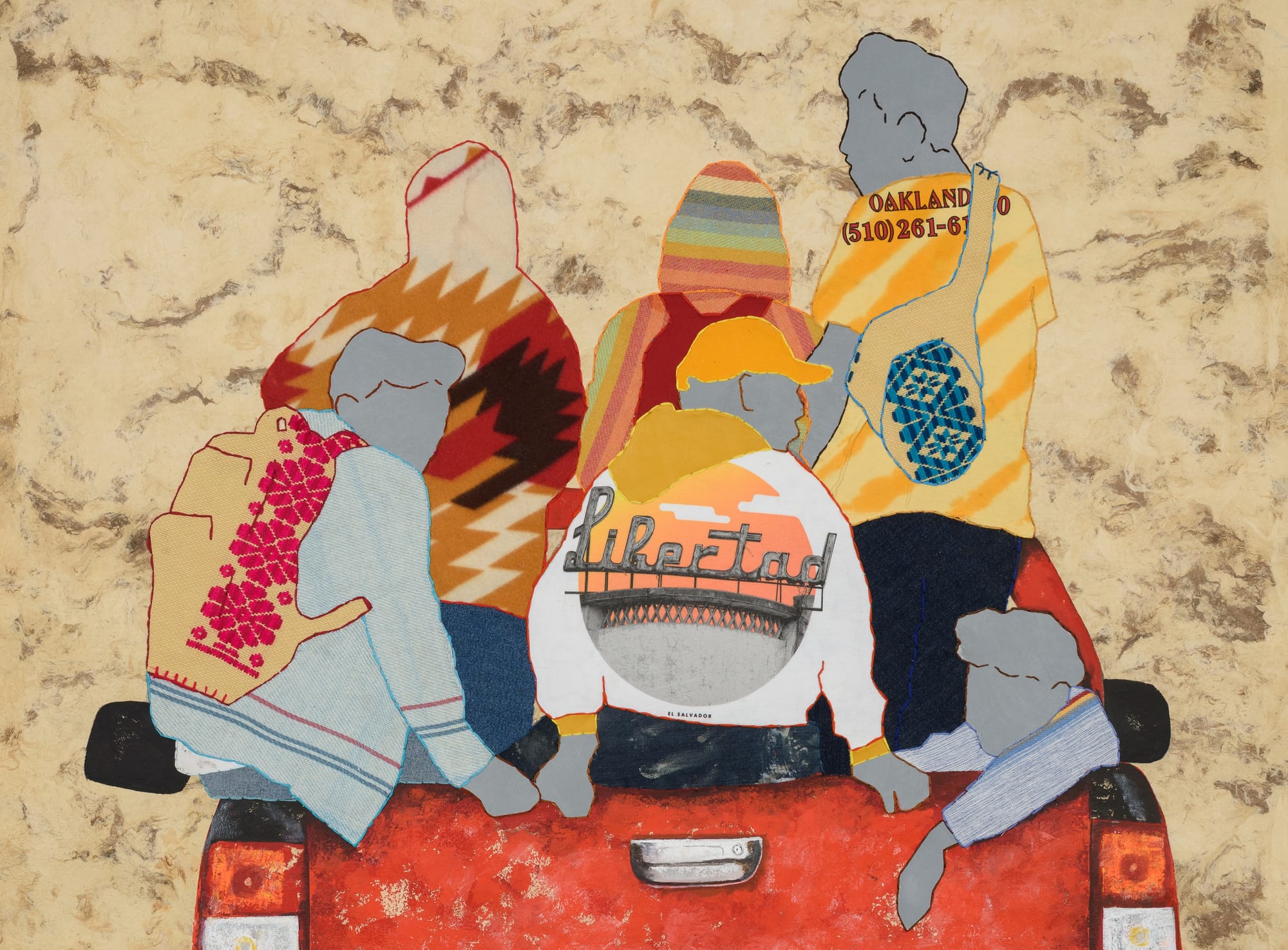
Arleene Correa Valencia creates art from bark paper and thread, turning embroidery into testimony about undocumented life in America. As a DACA recipient, she channels personal displacement and liminal existence into textile work that operates somewhere between craft tradition and contemporary statement.
Her practice hinges on transformation. Bark paper, delicate and vulnerable, becomes a surface for dense embroidery that speaks to resilience and connection. The work doesn't narrate immigration stories in the didactic sense. Instead, it inhabits the emotional texture of uncertainty, the texture of belonging to multiple places and none.
Valencia's approach reflects a broader shift in how artists from immigrant backgrounds engage visibility. Rather than positioning immigration as a problem requiring explanation, she renders it as lived experience worthy of aesthetic attention. The work carries weight without performing victimhood.
Her pieces circulate within gallery spaces and broader conversations about cultural identity and precarity. The specificity matters. She's not making generic statements about "the immigrant experience." She's making art from her particular, unresolved position within American legal and social structures. The thread holds.
This work arrives at a moment when DACA's future remains unstable, when the stakes of undocumented existence remain material and urgent. Valencia's embroidery doesn't solve anything. It documents what it feels like to exist in the interim.