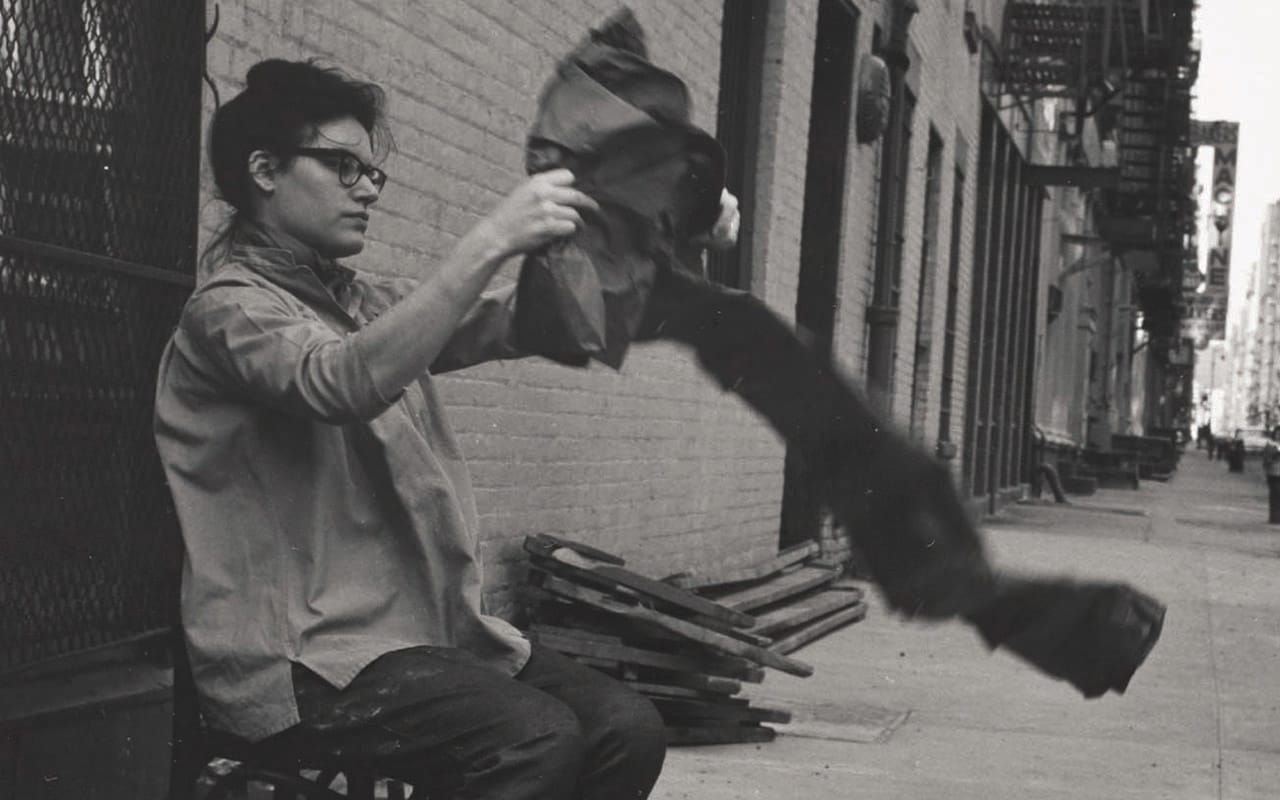
Alison Knowles remains one of experimental art's great enigmas. The Fluxus pioneer, who spent decades creating conceptual performances, scores, and installations that challenged what art could be, has resisted biographical clarity her entire career. Even Michael Nyman's new book, drawing on years of research and direct access to Knowles herself, leaves her inner life largely opaque.
This isn't accidental. Knowles built her practice around ephemerality and chance operations, deliberately working against the retrospective impulse. She composed event scores instead of finished objects. She performed once and moved on. She gave away works. The mechanisms of her creative thinking remain partly unknowable because she engineered them that way.
The book documents her collaborations with John Cage, her performances across decades, her influence on everything from contemporary installation to conceptual music. But the personal motivations, the emotional landscape, the reasons behind certain choices, stay sealed. Knowles collaborated with Nyman on the project yet kept strategic distance from conventional autobiography.
What emerges instead is a portrait of an artist who understood that mystery itself could be a radical act. In an era of oversharing and algorithmic exposure, Knowles' refusal to be fully known reads differently now. She didn't hide from history. She simply refused to make herself legible on anyone else's terms.