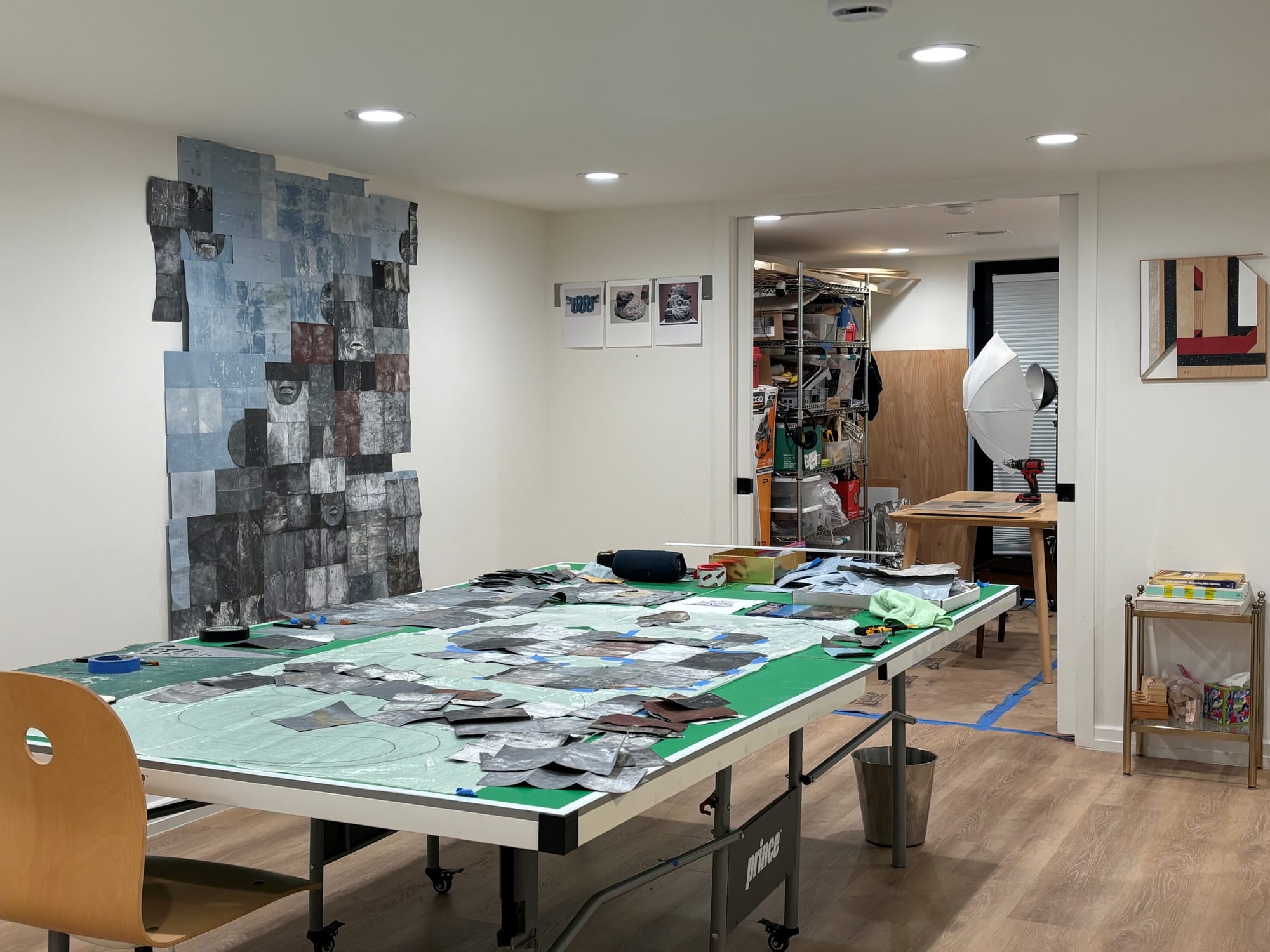
An artist working with materials that carry their own histories of use and manipulation opens a conversation about artistic intention versus material agency. The quote frames a practice where the artist doesn't simply impose vision onto blank surfaces, but rather engages in dialogue with what those materials already are, what they've been used for, and what traces they bear.
This approach challenges the romantic notion of the artist as sole creator. Instead, it positions the studio as a site of negotiation. A painted canvas, recycled plastic, salvaged wood, or repurposed fabric arrives with embedded meaning. The artist's job becomes less about domination and more about listening, redirecting, revealing what was already there.
The practice sits comfortably within contemporary art's broader skepticism toward authorship and originality. Artists across media now work this way: refusing pristine materials, embracing constraint, letting the work's genesis become part of the work itself. It's not new philosophically, but it remains a radical departure from the atelier tradition of controlled creation.
What makes this statement sharp is its specificity. Not "I like to experiment" or "I challenge materials." The word "manipulation" does heavy lifting here. It admits the artist's hand while acknowledging the material's resistance. That tension is where interesting work lives.