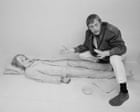
Andrew Durbin's new book resurrects two artists who shaped New York's postwar avant-garde, then vanished from the historical record. Paul Thek, a sculptor and painter, and Peter Hujar, a photographer, commanded the attention of everyone that mattered in the 1960s and beyond. Warhol gifted Thek a Brillo box. Sontag dedicated two books to him and slept with him. Fran Lebowitz called Hujar "a genius about sex." Cy Twombly, Tennessee Williams, Gore Vidal, and Alex Katz all orbited their work.
Yet museums forgot them. Galleries stopped showing them. History moved on.
Durbin's intimate double biography doesn't just answer who they were. It excavates the queer networks and underground scenes that sustained them, the artistic conversations that defined an era, and the institutional indifference that erased them. The book treats both men with tenderness and rigor, refusing nostalgia while honoring what their work actually accomplished. It's an argument, really. These weren't footnotes to the real story of American art. They were the story. We just stopped paying attention.