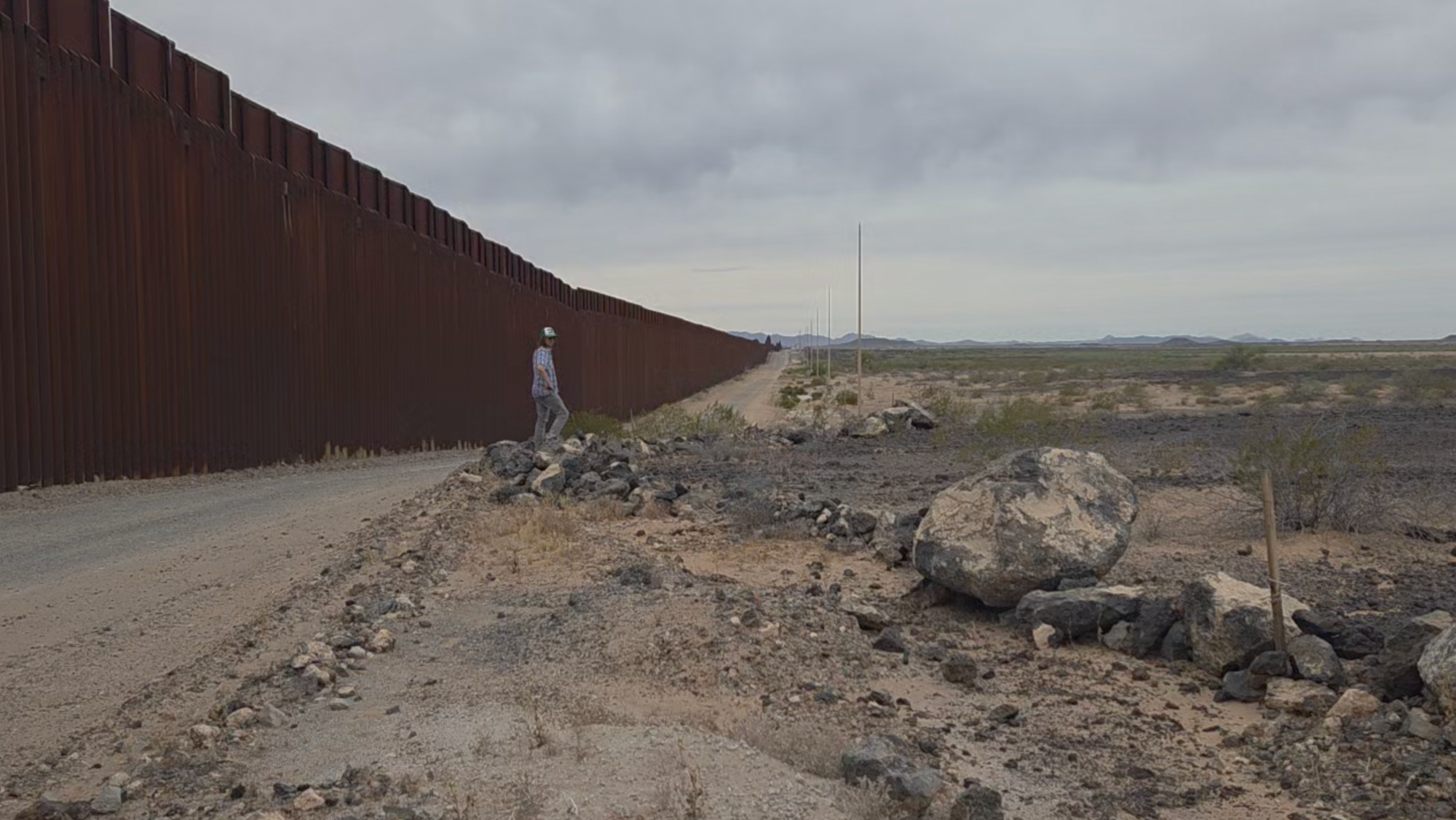
Construction crews building sections of Trump's border wall in Arizona destroyed an ancient intaglio near the town of Ajo, damaging a thousand-year-old etching that archaeologists and the Tohono O'odham Nation believe served as a sacred site for their ancestors.
The Las Playas Intaglio, a geoglyph carved into the desert floor, had survived centuries of weathering and use. Its destruction marks a collision between infrastructure development and cultural preservation, one that raises questions about environmental review processes and consultation with Indigenous communities before construction begins.
The Tohono O'odham Nation has long held these lands as ancestral territory. The intaglio likely held ceremonial significance, though its exact purpose remains part of ongoing archaeological study. Its erasure represents not just the loss of an artifact, but the erasure of a chapter in Indigenous history.
The incident joins a growing list of environmental and cultural damage tied to border wall construction across Arizona, California, New Mexico, and Texas. Previous projects have fragmented habitats, damaged ancient burial sites, and cut through land held sacred by multiple tribes. Each destruction forces a reckoning: how much cultural heritage gets sacrificed for political priorities.
The damage is irreversible. What remains is documentation and the question of what protections failed.