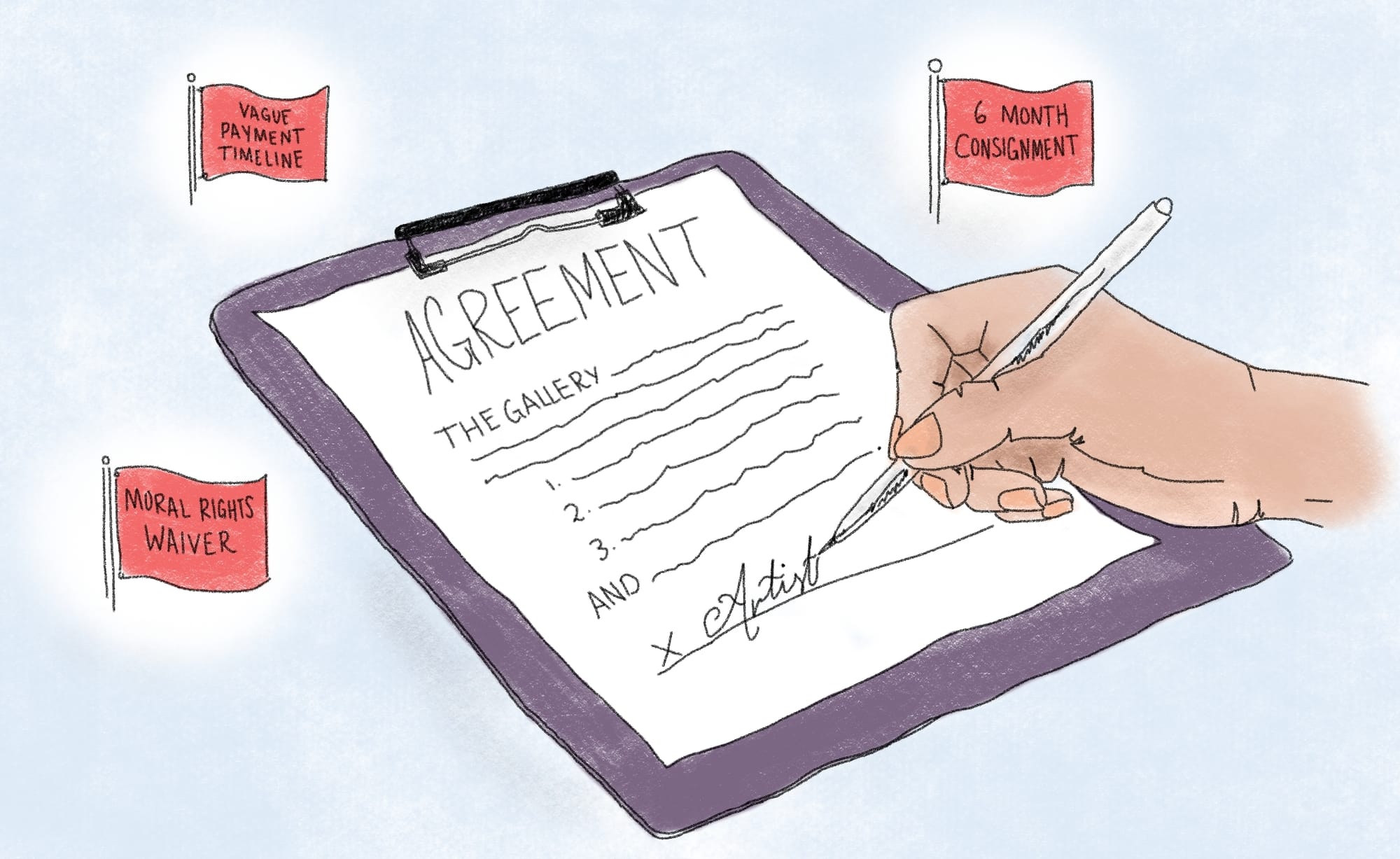
Museums and galleries have built a system that extracts enormous value from artists while offering minimal protection in return. Long consignment periods, sometimes stretching years, let institutions hold work without commitment or guaranteed placement. Artists sign away moral rights, surrendering control over how their pieces are displayed, altered, or attributed. The contracts themselves remain deliberately vague, buried under language about "standard practice" that favors the institution at every turn.
This isn't bureaucratic incompetence. It's structural exploitation. A gallery can keep a painting for two years without selling it, display it poorly, or loan it to another institution without the artist's input. The artist has no recourse. They can't pull the work early without penalty. They can't demand better terms because refusing means losing access to venues that determine their career trajectory. It's a power imbalance dressed up as professionalism.
The real problem: artists need these institutions more than institutions need any single artist. So galleries and museums have engineered contracts that transfer risk and creative control entirely upward, away from makers and toward gatekeepers. Until artists organize around contract reform or larger institutions model transparency, these terms will remain the unspoken price of entry into the art world.