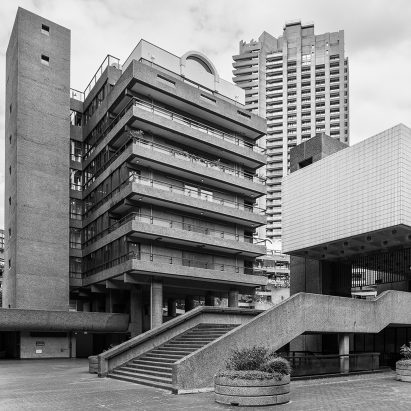
Owen Hopkins and photographer Nigel Green have published Brutalist London through Blue Crow Media, a comprehensive visual survey of over 50 post-war concrete structures across the capital. The book moves beyond the monolithic stereotype of brutalism, presenting the architectural movement as a diverse tradition spanning civic monuments, housing blocks, and cultural institutions.
Hopkins curates seven standout examples from the collection, each illustrating what he calls "lots of ways to be brutalist." Rather than treating brutalism as a monolithic aesthetic, the book acknowledges the range of approaches architects employed within the style. From utilitarian council housing to grand theatrical venues, the selection reveals brutalism's penetration across London's social and cultural landscape.
Green's photography captures the raw materiality that defines the movement. Concrete surfaces, geometric forms, and imposing scales dominate the images, yet the collection avoids presenting these buildings as mere monuments to a fallen style. Instead, Hopkins positions them as active works within London's living urban fabric.
The project arrives during a period of renewed interest in brutalist architecture, following decades of dismissal and demolition. Museums and galleries have mounted major exhibitions celebrating the style. Architectural critics increasingly recognize brutalism's social aspirations and formal innovation. Publications dedicated to preserving and documenting brutalist works have proliferated across Europe and North America.
Blue Crow Media specializes in architecture books that combine scholarly depth with visual richness, and Brutalist London fits that mandate. Hopkins, an architecture historian and former curator, brings contextual authority to the selection, while Green's photography provides the visceral documentation that brutalism demands.
The book challenges the reductive view of brutalism as a single, monolithic expression. By presenting London's diverse brutalist buildings in dialogue with one another, Hopkins and Green argue for a more nuanced understanding of the movement's range, flexibility, and lasting relevance to contemporary urban design.
WHY IT MATTERS: As brutalist architecture faces increasing demolition pressure and preservation challenges, books documenting these structures serve as critical historical records while contributing to the architectural reevaluation reshaping how cities value post-war design.
CATEGORY: