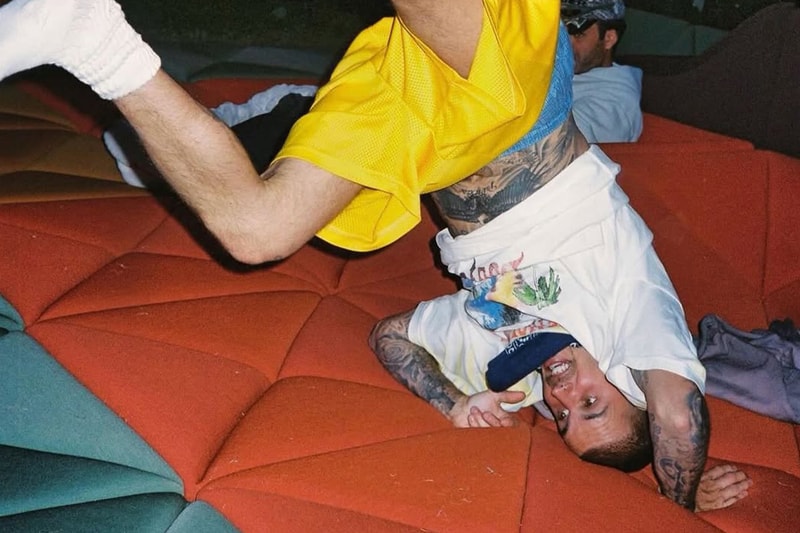
French design studio Paulin, Paulin, Paulin constructed an exclusive backstage sanctuary at Coachella 2026 centered on Pierre Paulin's iconic 1970 "Dune" sofa. The installation featured custom colorways of the modular furniture piece, creating a private desert retreat for headlining artist Justin Bieber and guests including Hailey Bieber and SZA.
Paulin's "Dune" sofa represents a crucial moment in late-twentieth-century design. The visionary French designer originally conceived the work as too experimental for commercial viability during his lifetime. Its organic, sculptural form challenged conventional furniture manufacturing and earned reputation as an avant-garde artifact rather than a practical object.
The sofa's rediscovery reflects broader shifts in luxury design and brand partnerships. High-profile artists now commission bespoke installations that blend cultural cache with design heritage. By positioning Paulin's utopian furniture within festival culture, the collaboration transforms a museum-quality piece into lived experience.
The family-run studio now produces limited first editions of the "Dune" sofa, elevating its status from forgotten experiment to coveted collector's item. This revival mirrors broader trends in design circles where mid-century radical proposals gain new relevance through contemporary recontextualization.
Coachella's backstage infrastructure increasingly functions as a showcasing ground for luxury design partnerships. Festival appearances by artists like Bieber demand premium spatial experiences, creating demand for bespoke installations. The Paulin collaboration demonstrates how design studios leverage celebrity platforms to reintroduce historical furniture into contemporary consciousness.
The custom colorways suggest the sofa's modular form allows personalization without compromising Paulin's original vision. This flexibility distinguishes the "Dune" from other period pieces, positioning it as both historical artifact and adaptable design system.
THE TAKEAWAY: Coachella's celebrity clientele increasingly drives demand for museum-quality design installations, transforming festival backstage spaces into galleries where forgotten modernist furniture gains cultural and commercial renewal.