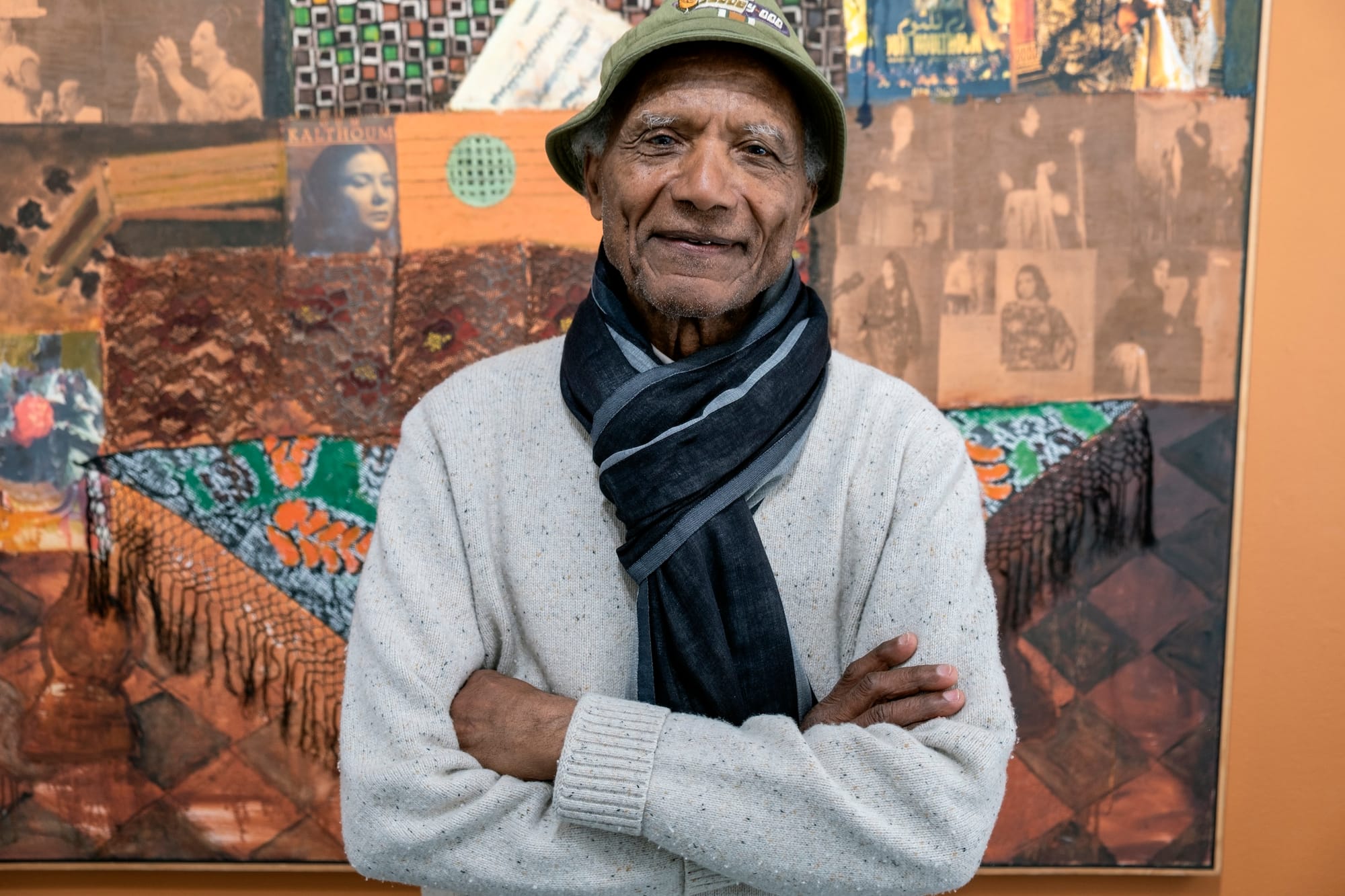
Mohammad Omer Khalil, the 90-year-old Sudanese printmaker based in New York, finally receives major institutional recognition with a multi-city retrospective celebrating his decades of artistic innovation. The exhibition traces Khalil's career through experimental approaches to printmaking, a medium he has pushed far beyond traditional boundaries.
Working across woodblock, lithography, and mixed media techniques, Khalil has long occupied a singular position in contemporary art, creating work that bridges African and global modernist traditions. His practice resists easy categorization, moving fluidly between abstraction and figuration while maintaining a rigorous formal sensibility. The retrospective demonstrates how his experiments with process have consistently anticipated broader conversations in art about materiality, cultural identity, and the possibilities of print.
Khalil's belated recognition reflects both the art world's historical blindness to African and diaspora artists and the lasting impact of geographic isolation. Working in New York while maintaining deep connections to Sudanese culture, he operated somewhat outside the mainstream gallery circuit for much of his career. The multi-city scope of this retrospective suggests a deliberate effort to position Khalil within art history proper, rather than as a footnote or curiosity.
At 90, Khalil joins a growing roster of elder artists whose careers are being reevaluated and celebrated. These retrospectives often reveal how the market and institutions systematically overlooked visionary practitioners for decades. His work appears prophetic now, resonating with contemporary interests in non-Western modernisms and the conceptual possibilities of traditional craft techniques.
The exhibition arrives at a moment when printmaking itself has experienced renewed institutional interest, with major museums expanding their collections and exhibitions devoted to the medium. Khalil's lifetime of experimentation positions him as a crucial forerunner to this current moment.
THE TAKEAWAY: Khalil's retrospective corrects a long institutional oversight while affirming printmaking's continuing relevance in contemporary art practice.