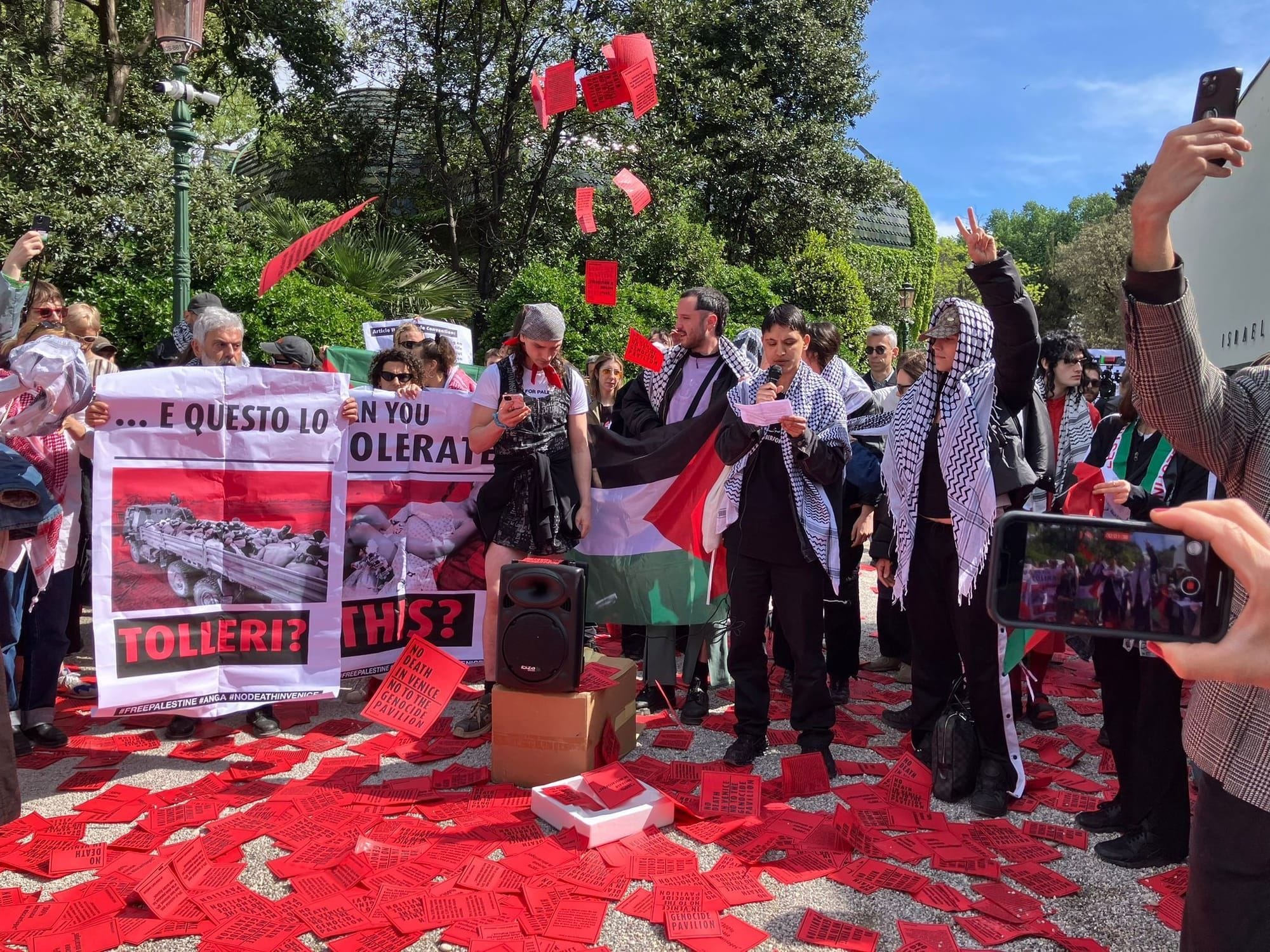
Labor unions, grassroots organizations, and artists coordinated a strike targeting the Israeli Pavilion at the Venice Biennale, scheduled for Friday, May 8. The action centers on a demand to "shut down the genocide pavilion," reflecting ongoing protests against Israel's military operations in Gaza.
The strike represents a significant escalation within the international art world's response to the conflict. Culture workers announced their intention to withhold labor across multiple sectors, leveraging the Biennale's status as one of the globe's most prestigious contemporary art exhibitions. The Venice Biennale, held biennially since 1895, draws artists, curators, collectors, and critics from across the world, making it a high-profile platform for political statements.
This action builds on months of activist pressure within cultural institutions. Artists and museum workers have increasingly used their positions to challenge institutional support for Israel, ranging from boycott campaigns to direct action. The framing of the Israeli Pavilion as a "genocide pavilion" reflects the language used by Gaza solidarity movements, which characterize Israeli military operations as genocidal.
The strike timing coincides with the Biennale's exhibition period, suggesting coordination aimed at maximum visibility. By organizing culture workers across unions and grassroots networks rather than through formal institutional channels, organizers attempted to circumvent institutional resistance and demonstrate broad-based opposition from within the art community itself.
The action raises questions about the relationship between artistic freedom, institutional neutrality, and political responsibility. Some view the strike as legitimate protest against state violence. Others argue it risks politicizing art spaces and limiting artistic expression. The Venice Biennale has historically hosted Israeli artists and pavilions without major disruption, making this strike a notable departure.
THE TAKEAWAY: The culture sector is becoming an active front in debates over the Gaza conflict, with artists and workers weaponizing their labor and the Biennale's prestige to register political opposition.