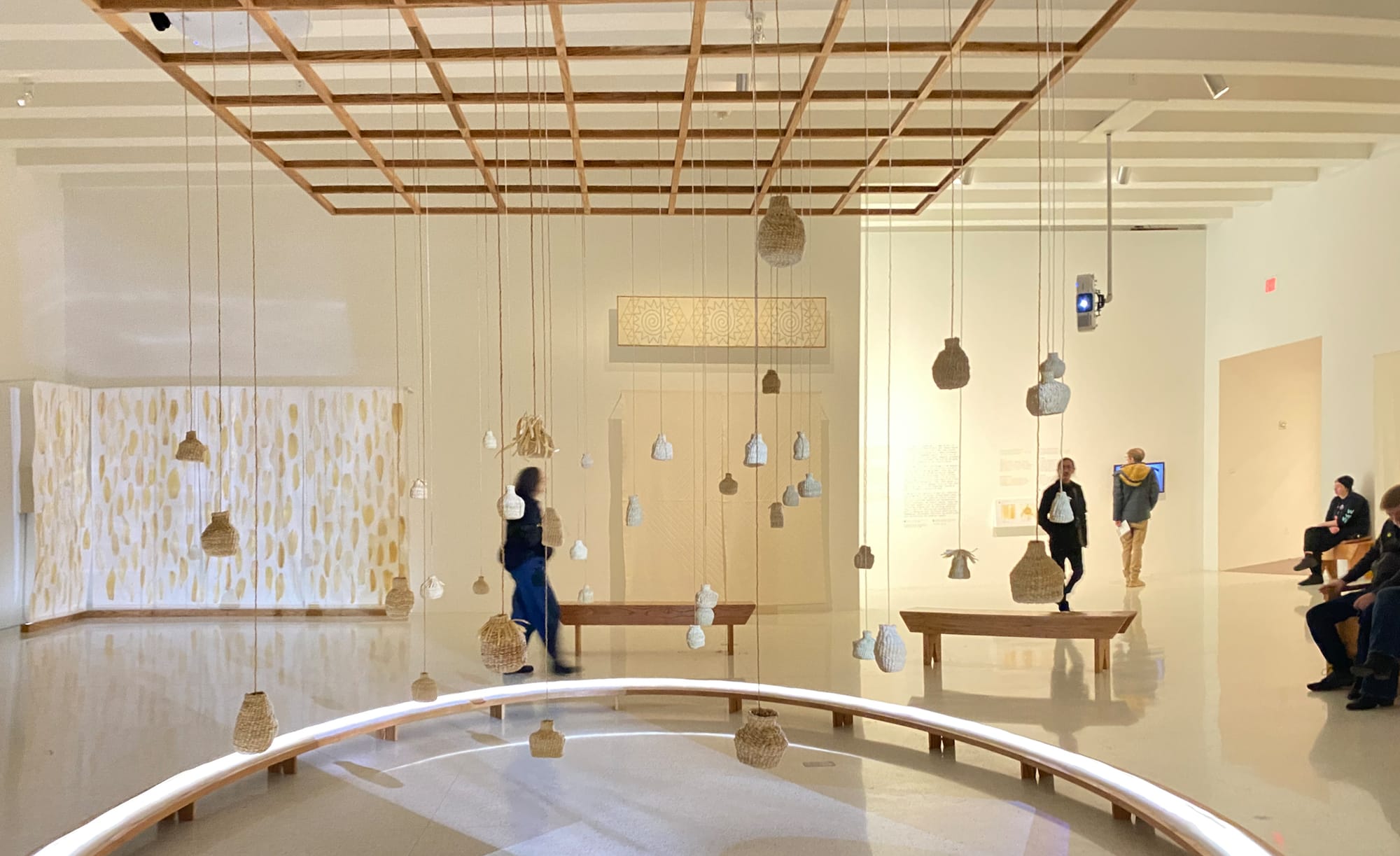
Rosy Simas, a Seneca artist based in Minnesota, opened an exhibition at the Walker Art Center that centers Indigenous perspectives on healing and community resilience. The artist spoke with Hyperallergic about her practice, which weaves together performance, installation, and video to explore how art creates spaces for collective peace.
Simas works at the intersection of contemporary art and Indigenous knowledge systems. Her practice resists extractive approaches to Native art by positioning viewers as participants rather than observers. At the Walker, her work invites audiences into environments designed for reflection and repair. The exhibition emerges from her longtime engagement with Minneapolis, a city where she has built a studio practice and deep roots within local communities.
Her artistic methodology reflects a commitment to decolonization. Rather than treating Indigenous culture as historical artifact, Simas activates it as living practice. Performance becomes a tool for reclaiming space and agency. Her installations function as sites of gathering, drawing on traditional concepts of collective responsibility.
The Walker Art Center's support for Simas represents a broader institutional shift toward platforming Indigenous artists on their own terms. The exhibition offers Minnesota audiences direct engagement with an artist whose work spans multiple disciplines and scales. Her approach challenges the white cube gallery model by introducing ceremonial elements and participatory frameworks.
Simas situates her Minneapolis practice within larger conversations about Native sovereignty and urban indigeneity. Her presence at a major regional institution like the Walker signals growing recognition that contemporary Indigenous art reshapes how institutions define their missions and audiences.
THE TAKEAWAY: Rosy Simas transforms the gallery into a space for Indigenous healing and collective participation, demonstrating how contemporary Native artists reclaim institutional platforms for community-centered practice.