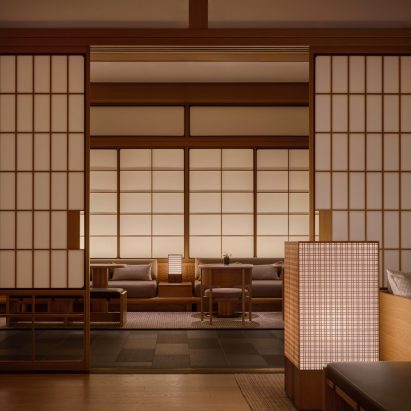
Kengo Kuma's architectural firm has completed the Capella Kyoto hotel on the grounds of a former primary school in Gion, Kyoto's historic geisha district. The London-based Brewin Design Office crafted the interiors by studying the "rhythm and progression" of traditional Japanese machiya wooden townhouses, which dominate the neighborhood's streetscape.
The design approach draws directly from the architectural vocabulary of Kyoto's most preserved quarter. Machiya townhouses, with their narrow frontages and deep interior layouts, establish a spatial cadence that Brewin translated into the hotel's guest rooms and public areas. Rather than imposing a contemporary aesthetic over the site, the designers engaged in what amounts to respectful architectural archaeology, extracting design principles from vernacular structures that have shaped the district for centuries.
Kuma's decision to build on a decommissioned school grounds rather than demolish historic structures reflects a broader trend in Japanese hospitality design toward adaptive reuse and cultural preservation. The architect, known for his contextual approach to materials and form, has long emphasized how buildings should integrate with their surroundings rather than dominate them.
The Capella brand positions itself as a luxury hospitality line focused on culturally-embedded experiences. For this Kyoto location, that philosophy manifests through interiors that echo the proportions, materials, and spatial logic of machiya residences while offering contemporary comfort. Brewin's work translates domestic spatial sequences into hotel programs, creating an interior experience that feels native to Gion rather than imported.
This project reflects the luxury hospitality industry's increasing investment in authenticity and place-based design. Rather than cosmopolitan standardization, high-end hotels now compete by offering guests genuine encounters with local architectural traditions. By grounding the interiors in machiya principles, Capella Kyoto positions itself not as a Western intervention in a historic district but as an extension of Kyoto's own design legacy.
THE TAKEAWAY: Luxury hospitality increasingly succeeds by studying vernacular architecture rather than ignoring it, turning cultural preservation into a design asset.