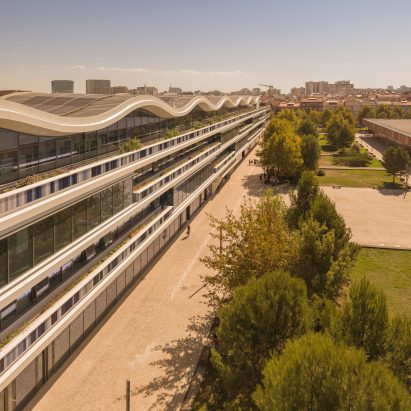
KPF and Saraiva+Associados have completed the Oriente Green Campus in Lisbon, converting an abandoned shopping mall skeleton into a mixed-use innovation hub. The Moscavide project salvages a massive, unfinished concrete structure originally earmarked for retail development. Rather than demolish the hulking framework, the architects threaded green terraces and open courtyards through the building, transforming it into modular workspace for startups and creative industries.
This adaptive reuse strategy reflects a broader shift in European urban development. Abandoned commercial projects, once symbols of financial failure, now offer architects raw material for reimagining urban density. The project avoids the environmental cost of demolition while addressing Lisbon's growing demand for flexible workspace outside its congested center.
The design prioritizes biophilic principles throughout. Green terraces interrupt the concrete mass at multiple levels, creating informal meeting areas and reducing the sense of enclosure typical of repurposed industrial spaces. Courtyards puncture the block facade, allowing light and air to penetrate what would otherwise read as a monolithic slab.
The campus arrives as Portugal positions itself as a growing tech hub. Lisbon's startup scene has expanded dramatically in recent years, with companies relocating from Western Europe to take advantage of lower operating costs and tax incentives. The Oriente Green Campus joins other adaptive projects transforming the city's periphery into innovation districts.
For KPF, known for large-scale institutional and commercial work, and the locally rooted Saraiva+Associados, the project demonstrates how existing structures can anchor neighborhood regeneration. Rather than erasing failed development, they chose intervention. The campus now hosts startups, design firms, and creative agencies in a setting that blends workspace with landscape.
THE TAKEAWAY: Adaptive reuse of failed commercial projects increasingly offers cities a pragmatic alternative to demolition, extending urban life cycles while reducing environmental impact.