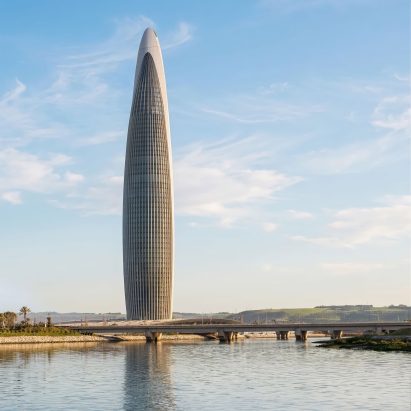
Morocco now claims the continent's third-tallest building. The Mohammed VI Tower, a 250-metre skyscraper designed by Rafael de La-Hoz and Hakim Benjelloun, opened recently as the country's highest structure, dominating the skyline between Rabat and Salé along the Bou Regreg river.
The tower's rocket-like silhouette marks a significant architectural statement for Morocco. Named after King Mohammed VI, who has ruled since 1999, the building reflects both national pride and the kingdom's ambitions as a modern African economic hub. De La-Hoz, the Spanish architect, and Benjelloun bring considerable design pedigree to the project, combining contemporary architectural language with contextual sensitivity to Morocco's urban fabric.
The tower's position along the Bou Regreg transforms a historically significant waterway into a focal point for development. The river separates Rabat, Morocco's capital, from Salé, creating a natural boundary that this structure now bridges visually and symbolically. The architectural vocabulary, with its distinctive tapered form, references Morocco's traditional craftsmanship while employing contemporary materials and engineering.
This addition to Africa's skyline follows a wave of ambitious high-rise construction across the continent. The tower ranks third in Africa, behind buildings in South Africa and Egypt, positioning Morocco within conversations about African urban development and architectural innovation. The project demonstrates how nations use landmark structures to signal economic growth and cultural confidence on the international stage.
For Moroccan architecture, the Mohammed VI Tower represents a departure from the country's colonial heritage aesthetic. It stakes a claim in contemporary global architecture without abandoning regional identity. The collaboration between Spanish and Moroccan design studios reflects the cross-cultural partnerships that define 21st-century architectural practice.
THE TAKEAWAY: Morocco's new tallest building signals the kingdom's shift toward bold contemporary architecture while anchoring development along a historically meaningful urban corridor.