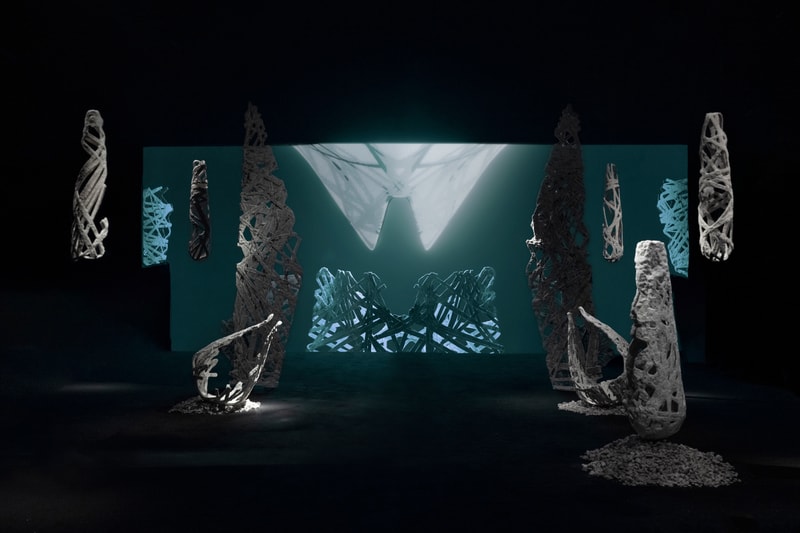
Sruli Recht's "LAIR" debuted at the SWCAC museum in Shenzhen as a 15-year labor that reimagines sculpture through the lens of natural processes. The exhibition spans 68 objects across 11 installations, each piece born from materials shaped by forces that sculpt the Earth itself.
Recht abandons conventional studio practices in favor of working alongside geology. The artist employs lava casting, harvests lightning-formed glass, and incorporates bee-skin fur into his handmade objects. This methodology treats human craft as an extension of natural systems rather than a departure from them. The result reads less like traditional sculpture and more like archaeological discovery, where each piece appears excavated from the planet rather than constructed within it.
The ambition here reflects a broader shift in contemporary art practice, where artists increasingly collaborate with nonhuman forces and materials. Recht's work sits alongside a growing movement that questions human exceptionalism in creative practice. By surrendering control to geological time and chemical reaction, he produces objects that challenge viewers to see sculpture not as domination of materials but as negotiation with them.
The Shenzhen venue carries its own significance. The city represents a particular contemporary paradox: rapid industrialization and technological acceleration alongside growing environmental consciousness. Placing "LAIR" there amplifies the work's conceptual weight, presenting a counter-narrative to development-at-all-costs through objects that speak the language of deep time.
Recht's exhibition suggests that artistic innovation need not occur in opposition to nature but within partnership with it. The 15-year timeline itself becomes a statement about patience and process, values increasingly foreign to contemporary art markets that prize novelty and rapid production cycles.
THE TAKEAWAY: Recht positions handmade sculpture as a conversation with geological forces rather than a conquest of inert materials.