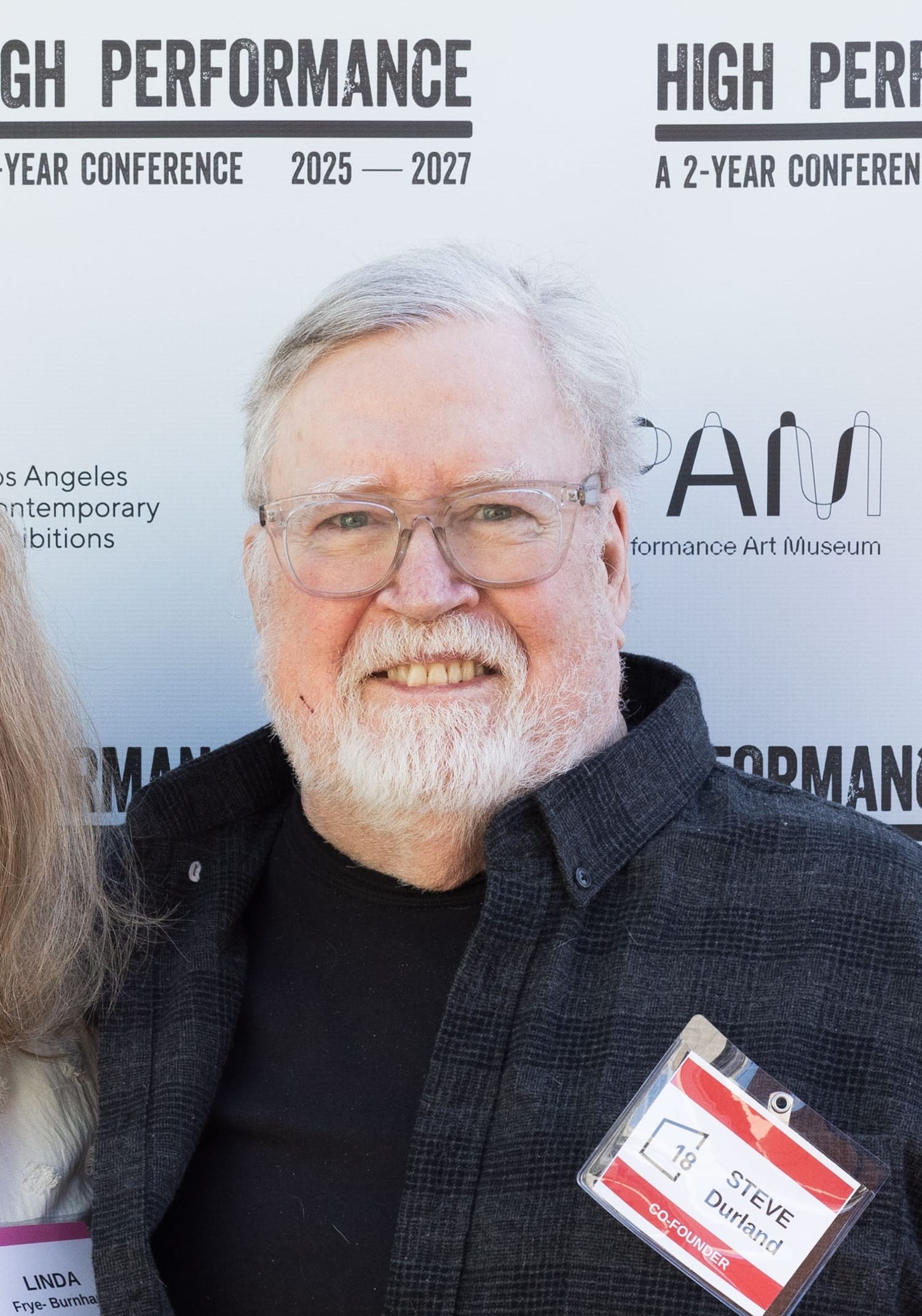
Steven Durland, the editor who shaped discourse around performance art for decades, died at 75. His tenure at High Performance magazine transformed the publication into the definitive voice for a sprawling, often marginalized art form during its crucial decades of development.
Durland co-founded High Performance in 1978 alongside Phillip Horvitz, establishing Los Angeles as an intellectual center for performance art when the coasts still battled for supremacy. The magazine became essential reading for artists working in body-based, ephemeral, and conceptual practices. Durland's editorial vision championed performers and theorists who might otherwise have been relegated to the periphery of institutional art discourse.
Beyond editing, Durland maintained his own performance practice, understanding performance art not as theory but as lived experience. This dual role—practitioner-critic—gave his editorial voice authority that pure academics lacked. He recognized early that performance art required documentation and critical apparatus because the work itself vanished. High Performance became that apparatus, preserving performances through photographs, reviews, and artist statements.
The magazine ran from 1978 through the mid-2000s, capturing the explosion of performance art through AIDS activism, the culture wars, and the emergence of identity-based performance practices. Durland published everyone from established figures to emerging voices, treating performance art as a field worthy of sustained attention rather than novelty.
His death marks the passing of a generation of arts journalists and curators who built infrastructure around experimental practices before those practices found institutional validation. High Performance operated on passion and limited resources, yet achieved outsized influence. The magazine's archive now matters more than ever as institutions finally recognize performance art's centrality to postwar American art history.
THE TAKEAWAY: Durland's legacy rests not in performing a single definitive work but in creating the critical apparatus that allowed performance art itself to be recognized, documented, and remembered.