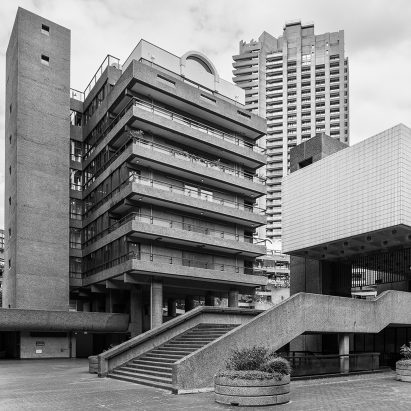
Owen Hopkins and photographer Nigel Green have documented London's brutalist heritage in a new book that challenges the monolithic perception of the architectural movement. Published by Blue Crow Media, "Brutalist London" surveys over 50 post-war concrete structures across the capital, from civic monuments to humble council housing, revealing what Hopkins calls "lots of ways to be brutalist."
The book arrives at a moment when brutalism enjoys renewed cultural currency among architects, designers, and the design-conscious public. Once dismissed as austere and forbidding, concrete modernism has experienced a critical rehabilitation over the past decade, with museums mounting retrospectives and Instagram transforming brutalist buildings into aesthetic objects. Hopkins and Green's project contributes to this revaluation by treating brutalism not as a unified style but as a diverse set of responses to post-war urban needs.
The photography by Green emphasizes the formal qualities of these structures. Raw concrete surfaces, geometric massing, and sculptural detail become subjects worthy of sustained visual attention. By selecting seven buildings as favorites, Hopkins curates a particular narrative about London's architectural identity. The inclusion of council housing alongside theatres and civic centers suggests that brutalism emerges from democratic impulses, not just monumental ambition.
This specificity matters in publishing landscape increasingly crowded with architectural surveys. "Brutalist London" positions itself as neither nostalgic preservation nor academic treatise, but rather as a visual argument about how post-war London was built and imagined. The book's approach through photography rather than polemics allows readers to form their own relationship to these concrete forms.
THE TAKEAWAY: Hopkins and Green demonstrate that brutalism operated across class boundaries and building types, offering a more nuanced account of modernist London than its reputation for coldness typically suggests.