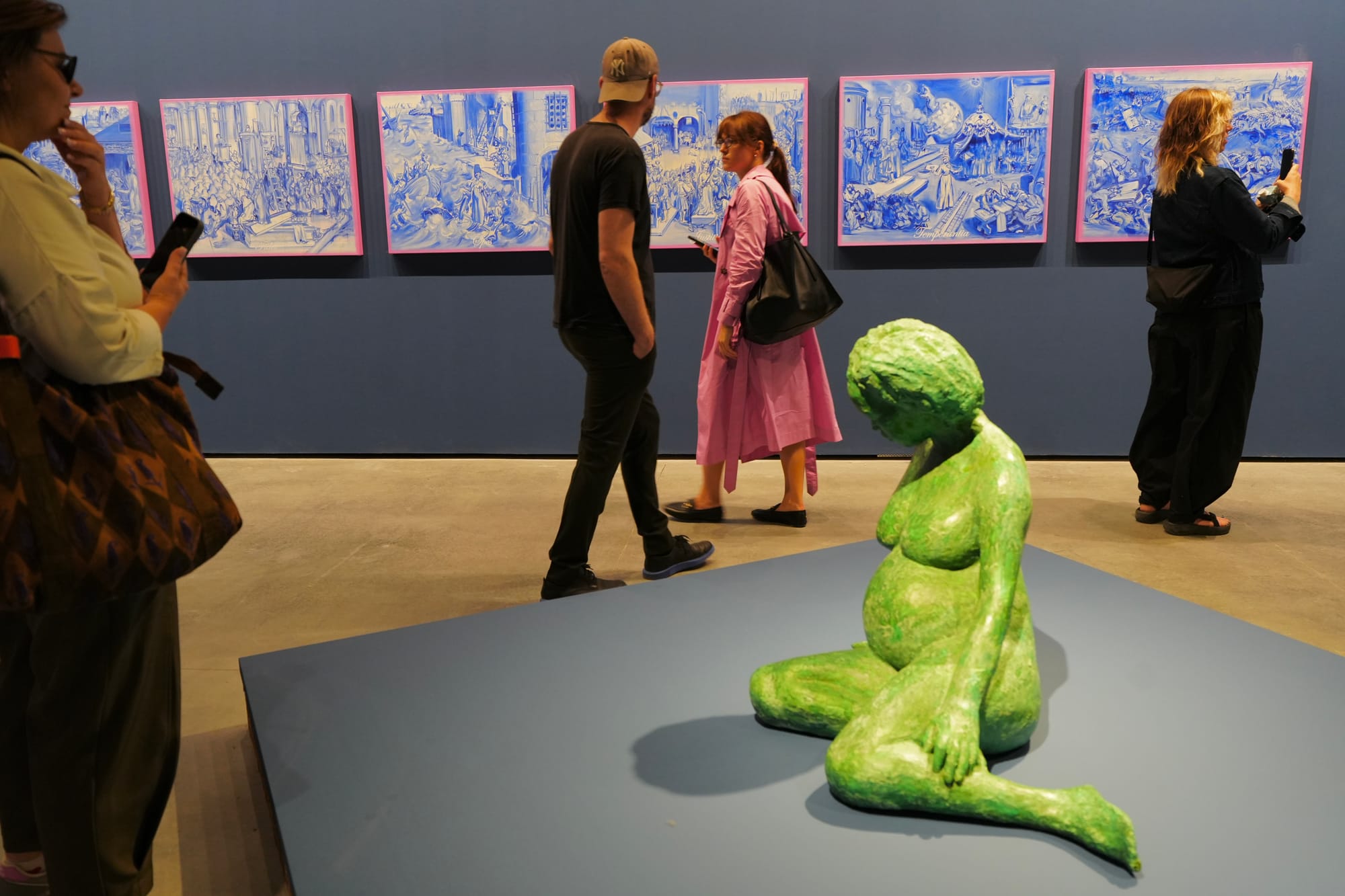
The Venice Biennale's latest international art exhibition, "In Minor Keys," treats the sprawling show as a musical composition, prioritizing subtlety and restraint over spectacle. Curators encourage viewers to attend to works that resist immediate gratification, rejecting the bombast that often dominates large-scale contemporary art presentations.
The exhibition philosophy borrows from musical terminology, positioning "minor" not as inferior but as a mode worth exploring. Artists featured in the show work in understated registers, creating pieces that require patience and repeated viewing to reveal their depths. This curatorial approach contests the assumption that impact demands volume or scale.
The Biennale, held every two years in Venice, represents one of the art world's most prestigious platforms. By framing the exhibition around restraint, organizers challenge visitors accustomed to Instagram-ready installations and sensational gestures. The minor key metaphor suggests that complexity lives in the quieter moments, in works that whisper rather than shout.
The show reflects broader conversations within contemporary art about sustainability, attention spans, and exhibition fatigue. As biennales proliferate globally and the art fair circuit exhausts collectors and critics alike, "In Minor Keys" offers counterbalance. It validates contemplative engagement and rewards slow looking.
This curatorial stance carries particular weight in Venice, a city whose own Biennale tradition emphasizes global representation and artistic dialogue. By emphasizing understatement, the exhibition positions the Biennale as a space for nuance rather than dominance, for discovery rather than pronouncement.
THE BOTTOM LINE: The Venice Biennale's "In Minor Keys" recalibrates how we value art by celebrating subtlety over spectacle, asking audiences to sit with works that demand patience instead of instant comprehension.