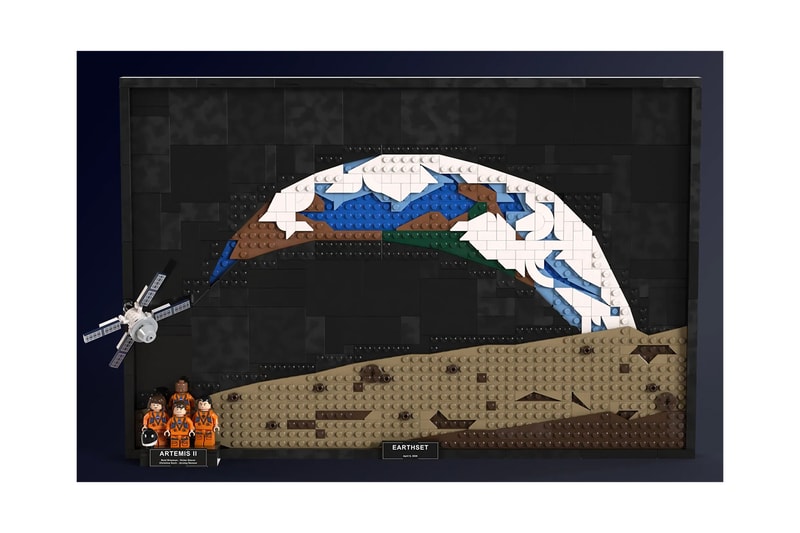
A LEGO Ideas creator called BuildingDreams has submitted "Earthset," a wall art concept that translates NASA's Artemis II lunar mission into buildable brick form. The set functions as framed poster-style wall art rather than a traditional LEGO structure, blending space exploration with contemporary interior design.
The design draws conceptual lineage from astronaut Bill Anders' legendary 1968 "Earthrise" photograph, one of the most iconic space images ever captured. Where Anders documented humanity's first visual encounter with Earth from lunar orbit, "Earthset" reverses the perspective. The build incorporates bright art print styling alongside detailed representations of the modern Artemis II spacecraft and its crew module.
LEGO Ideas represents a crowdfunding model where independent designers pitch original concepts to the company. Successful submissions that reach 10,000 votes advance to a review stage, with approved sets becoming official LEGO products. BuildingDreams' entry targets a specific intersection of audiences: space enthusiasts, interior design-minded builders, and collectors seeking non-traditional LEGO experiences.
The "Earthset" concept arrives during renewed cultural momentum around lunar exploration. Artemis II marks NASA's next crewed mission to the Moon, representing the agency's most ambitious human spaceflight goal since the Apollo era. By translating this mission into wall-mounted art, BuildingDreams taps into growing consumer appetite for LEGO sets that function as home décor rather than purely playable toys.
This approach reflects LEGO's broader strategic evolution. The company has increasingly cultivated adult builder demographics through premium architecture sets, artist collaborations, and display-focused collections. Sets like the NASA Space Shuttle Discovery and upcoming Colosseum model demonstrate LEGO's commitment to intellectual property licensing and educational theming that appeals to sophisticated collectors.
THE TAKEAWAY: LEGO Ideas submissions increasingly position brick-building as lifestyle design, merging space heritage with modern home aesthetics rather than traditional toy play patterns.