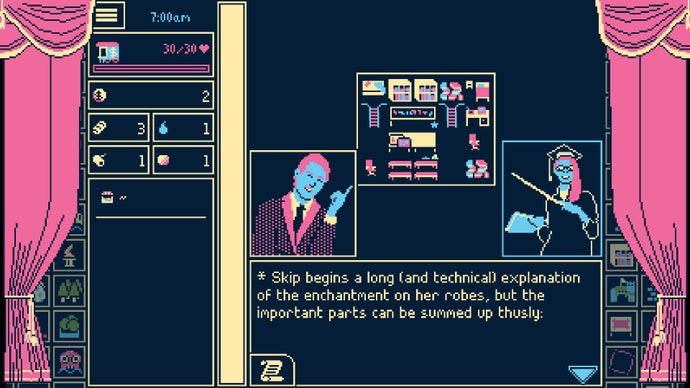
Titanium Court presents a deceptively simple premise wrapped in playful absurdism. Players must protect a football that doubles as an egg, keeping this dual-natured object alive through a series of escalating challenges. The game frames this custodial duty as both privilege and burden, demanding an upfront payment for the right to care for the football.
The review's tone suggests a game that subverts typical protect-the-object mechanics through dark humor and unexpected consequences. Failure carries genuine weight. Letting the football perish costs players more than initial investments, creating real tension around what appears initially to be a lighthearted puzzle.
Titanium Court operates in the tradition of indie games that treat premise with tongue-in-cheek seriousness. The conflation of football with egg, the reversal of typical reward systems, and the inversion of player agency, all point toward a title that questions why we engage with video game systems at all. Rather than celebrate the player's mastery, the game seems to mock the conventions of progression and achievement.
Eurogamer's playful review language mirrors the game's sensibility. The critic doesn't explain mechanics so much as express bewilderment at them, which suggests Titanium Court resists straightforward description. That's often the hallmark of games that prioritize concept and experience over traditional gameplay loops.
This type of experimental indie title has found its audience through platforms like itch.io and Steam, where unconventional designs thrive outside AAA publishing constraints. Games that make players question their own motivations and reward systems have become increasingly common in the indie space, from titles like Doki Doki Literature Club to Psychological horror experiments.
THE TAKEAWAY: Titanium Court operates as philosophical puzzle rather than conventional game, asking players to reckon with the peculiar psychology of digital ownership and custodianship.