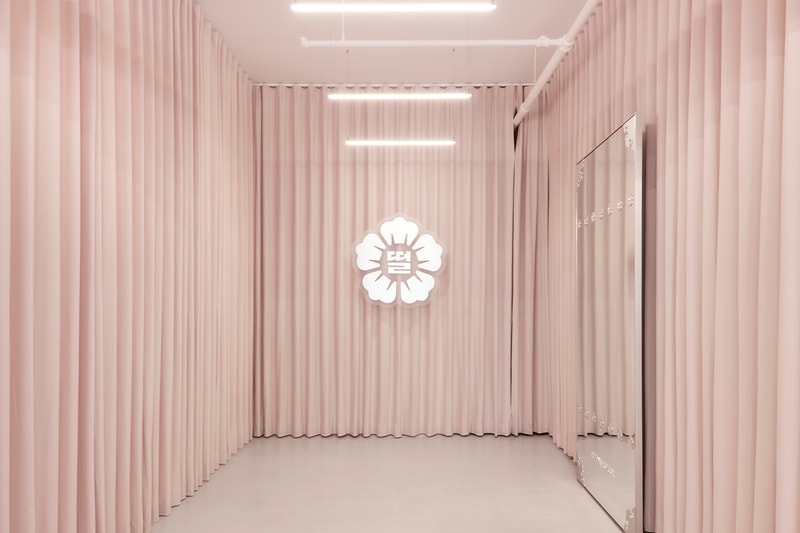
Korean American lifestyle brand Sundae School opens its first permanent retail location this May in Manhattan's Chinatown, marking a decisive expansion for the eight-year-old label. The 500-square-foot flagship at 117 Hester Street represents the brand's shift from pop-up culture to brick-and-mortar presence, a move that signals confidence in both the brand's identity and New York's retail landscape.
Designers Nohar Agadi and Andy Kim drew inspiration from traditional Korean Buddhist temples when conceiving the space. Metal pillars, gates, and layered curtains create what the brand describes as a "sequential, calming retreat." This architectural approach transforms a relatively modest footprint into something spiritually intentional, reflecting Sundae School's broader aesthetic philosophy.
The store extends beyond typical retail function. It carries Sundae School's latest apparel alongside in-store exclusives, but the brand positioned the space as a community hub for indie brands, pop-ups, and local creatives. This multipurpose strategy echoes a broader trend in contemporary retail where lifestyle brands function as curated spaces rather than simple transaction points.
Sundae School's arrival in Chinatown carries cultural weight. The neighborhood has historically served as a gateway for Asian American communities in New York, and the brand's establishment there signals the growing prominence of Korean American fashion and lifestyle culture within the city's retail ecosystem. That Agadi and Kim specifically referenced Buddhist temple design suggests intentionality around cultural representation rather than surface-level aesthetics.
For a brand that built its reputation through pop-ups and limited releases, permanence represents both opportunity and risk. The pop-up model created scarcity and urgency that fueled Sundae School's early success. A permanent store demands consistent traffic and sustained cultural relevance. The hybrid approach, combining flagship retail with continued pop-up programming, hedges that bet while establishing the brand as a serious player in New York's indie fashion infrastructure.