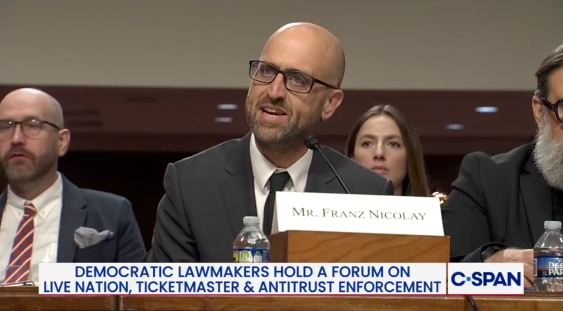
Franz Nicolay of indie rock band The Hold Steady testified before Congress this week about Live Nation Entertainment's stranglehold on the concert industry. The keyboardist presented himself as a working musician frustrated by the ticketing giant's monopolistic practices, offering a rare glimpse of artist discontent with the status quo.
Nicolay's testimony comes months after Live Nation and Ticketmaster settled their antitrust lawsuit with the Justice Department in a surprise agreement brokered by the Trump administration. The deal preserved the merger between the two companies rather than forcing a breakup, disappointing critics who viewed separation as the only meaningful remedy for the sector's consolidation problem.
The settlement required Live Nation to implement modest reforms. Ticketmaster agreed to reduce fees on certain events and improve customer service. Yet the core issue persists. Live Nation controls roughly 40 percent of concert promotion in America while Ticketmaster handles approximately 70 percent of ticket sales, creating what many in the music business view as an unbeatable advantage.
Nicolay's decision to testify signals growing frustration among mid-tier musicians who feel squeezed by the conglomerate's power. Artists like Kid Rock have publicly denounced the settlement, arguing it failed to address the real problem. The Hold Steady occupy a particular position in the music ecosystem. They draw devoted crowds but lack the superstar leverage to bypass Live Nation's machinery.
Congress appears poised to examine whether the settlement actually resolved anything or merely postponed accountability. Nicolay joined other witnesses in laying out how Live Nation's vertical integration lets the company favor its own venues and artists while making it nearly impossible for independent promoters to compete.
The testimony reflects a larger anxiety within music's middle class. Streaming has already gutted recorded music revenues. Live performance represents the last reliable income stream for touring bands. When that too becomes subject to monopolistic control, musicians have nowhere else to turn.