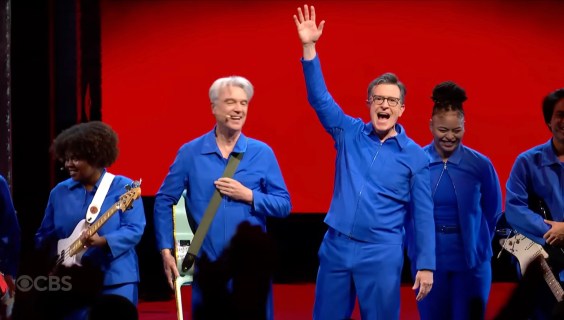
Stephen Colbert's final week hosting CBS's "The Late Show" has brought a parade of major musical guests. Last night, Colbert performed alongside David Byrne, the Talking Heads frontman and longtime musical hero of the late-night host. The episode represented one of Colbert's last opportunities to share the stage with artists who shaped his cultural sensibilities.
The network announced last year that it would end Colbert's eleven-year run at the helm of "The Late Show," a decision widely interpreted as an attempt to reposition the network ahead of the Trump administration. Rather than fade quietly, Colbert has stacked his final week with A-list performers and guests. Bruce Springsteen appeared on a recent episode, while the Thursday finale promises additional surprises Colbert has kept under wraps.
The Byrne performance carries particular weight for Colbert, who has long championed art-rock and new wave as formative influences on his sensibility. Talking Heads' angular approach to pop music and Byrne's distinctive theatrical presence shaped a generation of comedians and performers who came of age in the 1980s. By pairing Colbert with Byrne for a musical collaboration rather than a standard interview, the show acknowledged the deep aesthetic connection between the host and his guest.
The finale of "The Late Show" marks the end of an era in late-night television. Colbert's departure represents a significant shift in the late-night landscape, particularly given the program's consistent cultural relevance and sharp political commentary during his tenure. How CBS plans to fill the time slot remains uncertain, but the network's decision to end the show rather than transition it to a new host signals a deliberate editorial choice about the network's future direction.