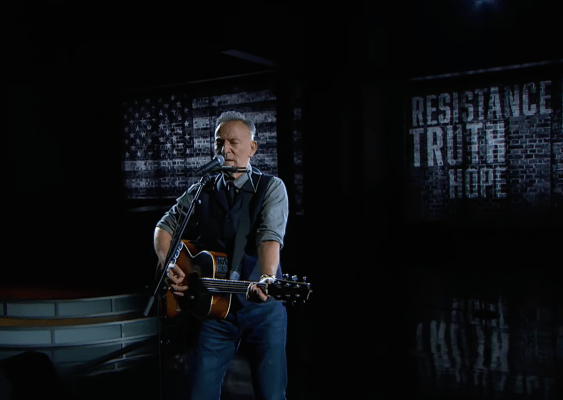
Bruce Springsteen delivered a performance weighted with political defiance on Stephen Colbert's penultimate episode of "The Late Show With Stephen Colbert," underscoring the gravity of the late-night program's final week.
CBS announced the show's cancellation last summer in a move widely interpreted as capitulation to Donald Trump, marking a stark moment in the network's relationship with one of late-night television's most consistently political voices. Colbert has seized his remaining airtime to make statements that matter. Earlier in the week, he performed with David Byrne, channeling the anarchic energy of that collaboration. Springsteen's appearance continued that defiant arc.
The Boss brought the weight of his catalog and his long history of protest songwriting to the stage. Springsteen has never separated his music from his politics, and his selection for this particular moment felt deliberate. His performance carried what the source describes as a "grave tone," suggesting the artist understood the historical moment he was contributing to. This was not a typical late-night musical slot but rather a statement of solidarity with Colbert's unflinching brand of political commentary.
The cancellation of "The Late Show" represents a chilling precedent in American media. A major broadcast network opted to remove one of its most successful programs rather than risk the ire of a political figure. Colbert's final week has become something of a cultural event, with A-list guests and performers using the platform to reinforce what late-night comedy once promised: a space for dissent and uncomfortable truths.
Springsteen's participation in this farewell carries particular weight. His entire career has been built on giving voice to working people and challenging power structures. That he appeared in this context, at this moment, represents a musician and a host refusing to go quietly into the night when political pressure mounts.