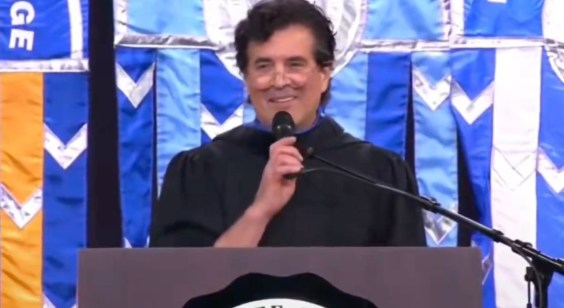
Scott Borchetta, the Big Machine Records founder and former executive, faced audible disapproval from graduating students at a college commencement ceremony after championing artificial intelligence to the assembled crowd. The booing marked a generational clash over technology's role in displacing workers across industries, particularly in creative sectors already destabilized by AI deployment.
Borchetta's choice to extol AI at a graduation podium proved tone-deaf to an audience entering a labor market roiled by automation. College seniors graduating into economic uncertainty responded with derision rather than inspiration, signaling broad skepticism toward tech-industry optimism decoupled from workers' actual concerns.
The moment reflects growing backlash against corporate cheerleading for AI systems that threaten creative employment. In music specifically, AI-generated content and voice synthesis have accelerated tensions between labels, artists, and platforms over compensation and artistic attribution. Borchetta's record-label pedigree made him an especially pointed target for audience criticism. The music industry has already grappled with major disruptions to its distribution and royalty models, and artists have increasingly resisted AI training on their work without consent or compensation.
The incident captures a wider cultural reckoning happening at graduation ceremonies nationwide. Students graduating into student-loan debt and compressed job markets show little patience for speakers disconnected from their realities. When those speakers represent industries extracting value through automation and worker displacement, the rejection becomes explicit.
Borchetta's booing illustrates how thoroughly the AI hype cycle has fractured from material conditions on the ground. Graduates aren't interested in narratives about technological progress that ignore their own precarious prospects. The record-label executive encountered an audience unwilling to accept corporate framing of AI as inevitable progress worth celebrating, choosing instead to voice their skepticism directly and loudly.