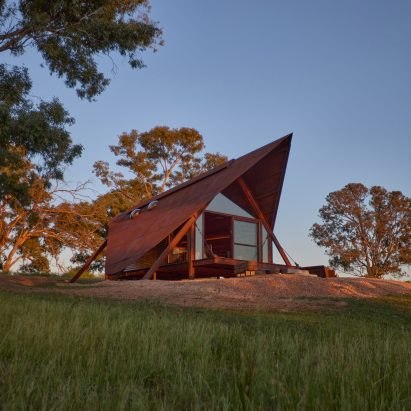
Casey Brown Architecture has completed Permanent Camping III, a pair of distinctive cabins in New South Wales that blend industrial materials with camping aesthetics. The structure uses weathering steel (Corten) to create two pitched forms that visually echo traditional tent silhouettes, positioning the boutique accommodation as a hybrid between permanent architecture and temporary shelter.
Located on a working cattle farm near Orange on Wiradjuri Country, the largest Aboriginal nation in New South Wales, PC3 operates as short-stay accommodation. The design choice of Corten steel speaks to both durability and visual storytelling. The rust-colored patina that develops on weathering steel creates a temporal quality, allowing the structures to age visibly alongside the landscape they inhabit. This material language transforms what could be simple utilitarian boxes into sculptural objects that reference nomadic forms while asserting permanent settlement.
Casey Brown Architecture has become known for projects that negotiate between rural Australian landscapes and contemporary design thinking. The studio's use of the word "permanent" in the title suggests a conceptual tension at work here. The tent, historically a portable shelter, becomes fixed in place. The camping experience, typically temporary, becomes institutionalized as boutique hospitality. These cabins sit at that intersection, where the romance of temporary dwelling meets the infrastructure of tourism.
The project also carries cultural awareness. Positioning PC3 on Wiradjuri Country acknowledges the nation whose territory it occupies. Whether this extends to substantive collaboration or remains gestural framing remains unclear from available information. The cattle farm context situates the cabins within working rural production rather than pure leisure retreat, complicating the glamping narrative that often evacuates land of its productive labor.
The Corten material itself references industrial heritage and contemporary design trends simultaneously. It speaks to Australia's mining and rural industries while signaling design sophistication. This material choice allows the structures to weather and develop patina over time, creating a temporal dimension absent from more stable materials like powder-coated steel or painted timber.