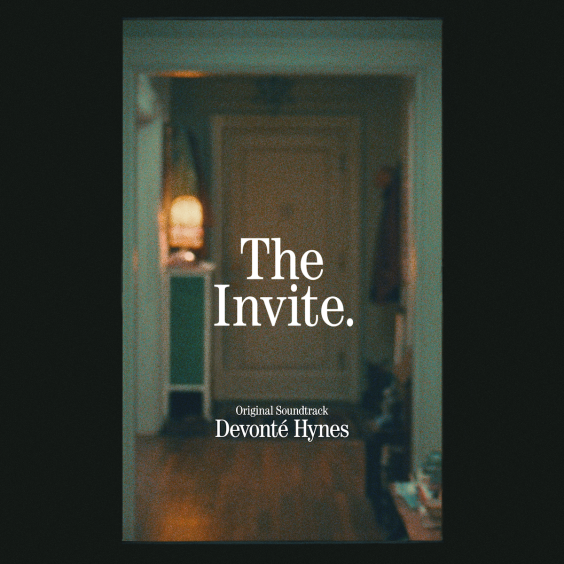
Dev Hynes, the composer behind Blood Orange's sonic experiments, has scored Olivia Wilde's dinner-party thriller "The Invite," arriving next month via A24. The film premiered at Sundance as one of the festival's standout acquisitions, a tense comedy featuring Seth Rogen, Edward Norton, Penélope Cruz, and Wilde herself. Will McCormack and Rashida Jones wrote the script.
Hynes releases the soundtrack ahead of the film's theatrical debut, leading with the track "Contentious Environment," which captures the score's anxious texture. The title alone signals Hynes' approach to the material. Rather than conventional thriller scoring, Hynes typically works in layered abstraction and atmospheric unease. His Blood Orange work demonstrated an ability to marry restraint with emotional intensity, qualities that suit a film premised on social tension escalating over dinner.
Wilde's third feature film represents a departure from her previous work in "Booksmart" and "Don't Worry Darling." This project leans into satirical horror, mining dark comedy from the mortification of bad dinner parties. The ensemble cast, helmed by established names like Norton and Cruz, suggests Wilde pursued prestige casting alongside her established collaborators like Rogen.
A24's acquisition of "The Invite" signals confidence in both Wilde's vision and the film's commercial viability. The label has built its reputation on handling smaller, challenging films with theatrical acumen. Pairing Hynes' compositional work with the film's release strategy positions the score as integral to the marketing and experience. Hynes' recognition in art-house cinema circles gives the soundtrack credibility beyond typical film-score audiences, potentially reaching Blood Orange listeners unfamiliar with Wilde's work.
The soundtrack's release timing, before the film itself, transforms Hynes' score from accompaniment into standalone artistic statement. This strategy has gained traction as streaming platforms and indie labels recognize scores as sellable products rather than mere functional elements. For Hynes, whose experimental approach has always challenged genre boundaries, the opportunity to compose