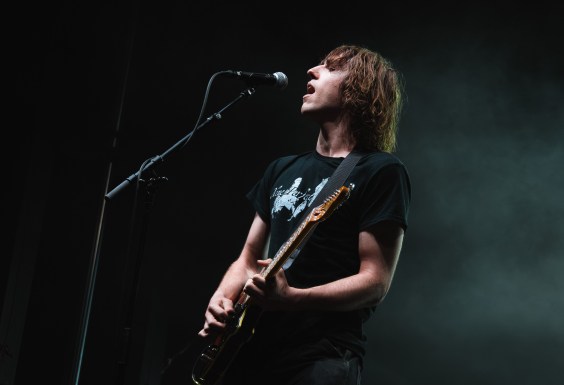
Geese delivers performances that defy the rigidity of studio recordings, instead creating something closer to spontaneous musical telepathy. The Brooklyn rock band transforms their songs into improvisational frameworks, allowing riffs and fills to sprawl and mutate across the stage with an almost orchestral fluidity. This apparent looseness stems from precision born of years together. The band operates as a unified entity, each member intuiting the others' movements without visible coordination. Their live shows resist easy categorization. Rather than faithfully reproducing album versions, Geese reconstruct their material in real time, treating familiar harmonic sequences as starting points for exploration. The result feels less like a performance of predetermined songs and more like a collaborative act of musical conjuring. The band's tight internal communication enables this controlled spontaneity. Their familiarity transcends technical proficiency. It represents a kind of artistic shorthand developed through sustained collaboration, where band members anticipate shifts and respond instinctively to creative impulses. This approach distinguishes Geese from acts that prioritize note-perfect replication of recorded work. Their stage presence suggests a band comfortable with uncertainty, trusting each other to navigate unexpected turns. The performance becomes a shared discovery rather than a execution of a predetermined script. This willingness to let songs breathe and transform during live performance characterizes contemporary rock's most compelling practitioners. Geese stands among those acts where the gap between album and stage feels genuinely productive, where live performance justifies itself as a distinct artistic statement rather than mere promotion for recorded work.