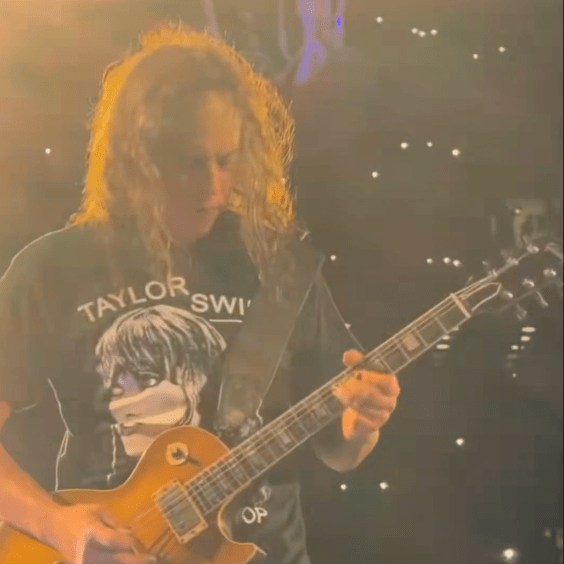
Kirk Hammett wore a T-shirt reading "Taylor Swift Is a CIA Psyop" during a recent Metallica performance, igniting backlash from Swift's fanbase. The Metallica lead guitarist's choice of stage wear, presumably meant as a joke, has triggered a coordinated response from Swifties on social media, who mobilized against the band and its member.
The incident reflects the cultural fault line between metal's older guard and the devoted Swift fandom that dominates contemporary pop discourse. Hammett's shirt carried an absurdist conspiracy theory that had circulated online, likely referencing broader internet culture around the band Geese, which faced its own viral accusations of being an elaborate "psyop." The timing suggests Hammett may have been riffing on the same internet lore that had recently engulfed another act.
What makes the moment notable is less about the shirt itself and more about what it reveals about fan power in 2026. Swifties have demonstrated themselves to be among the most organized and mobilized fanbases in pop culture, capable of generating significant attention and pressure around perceived slights. When one of metal's most legendary figures decides to mock Swift onstage, the response operates at a scale that Hammett's era of rock stardom might not have anticipated.
The incident represents a collision between generational attitudes toward celebrity and fandom. For Hammett and Metallica, the stunt likely reads as harmless provocation, part of metal's tradition of boundary-pushing onstage antics. For Swifties, the conspiracy theory framing, however tongue-in-cheek, registers as dismissive of their idol and the legitimacy of her cultural dominance.
Neither party will likely emerge chastened from this exchange. Metallica carries decades of credibility in rock circles where irreverence remains valued. Swift's fanbase has demonstrated it answers provocation with coordinated visibility. The clash underscores how differently various corners of popular music view celebrity, conspiracy thinking, and what counts as acceptable stage commentary in the streaming era.