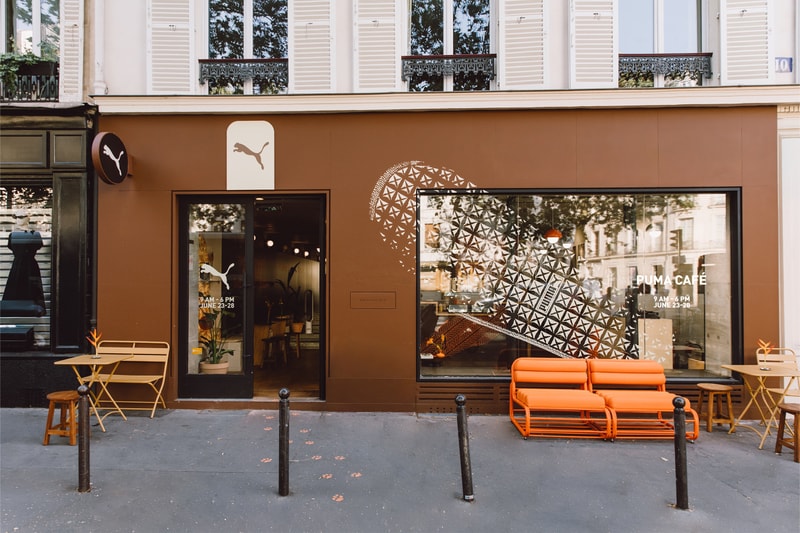
PUMA transformed a Paris Fashion Week venue into a café celebrating two of its most storied sneaker silhouettes: the Suede and the Speedcat. The pop-up, which operated June 24 through 28, functioned as both retail showroom and hospitality space, serving drinks and food while DJs Timothée Joly and Kofi Bæ provided the soundtrack.
The activation reflects a broader trend in luxury and sportswear marketing. Brands increasingly blur commerce and experience, turning product launches into immersive environments rather than traditional retail moments. PUMA's approach positioned the café as a respite during Fashion Week's frenetic schedule, offering attendees a curated narrative around two shoes that define the brand's heritage.
The Suede launched in 1968 and remains a pillar of sneaker culture, worn by athletes and fashion figures alike. The Speedcat, a more recent addition to PUMA's canon, draws inspiration from motorsport aesthetics and appeals to both performance-focused consumers and style-conscious collectors. By pairing these silhouettes in a single space, PUMA crafted a dialogue between heritage and contemporary design.
This café strategy contrasts with typical Fashion Week tactics. Rather than mounting a massive booth or runway show, PUMA created an intimate gathering spot. The inclusion of music and food signals the brand's understanding that Fashion Week attendees value experience alongside products. The partnership with Timothée Joly and Kofi Bæ added cultural credibility, tapping into Paris's deep electronic and DJ culture.
PUMA's move aligns with how major athletic brands now approach seasonal presentations. Nike, Adidas, and New Balance similarly invest in pop-up experiences that extend beyond footwear into lifestyle and culture. These activations generate social media content, foster community engagement, and provide brands with direct access to influential attendees and media.
The Paris café pop-up underscores that fashion's biggest moments no longer belong exclusively to clothing designers. Sneaker culture commands equal attention and resources, with brands treating iconic shoe models as