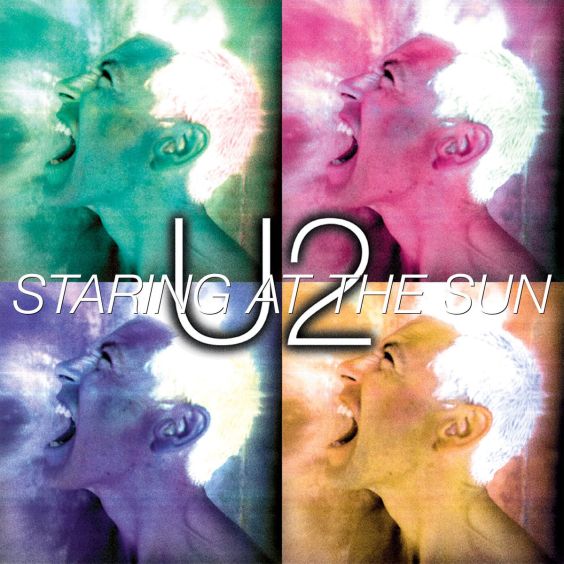
U2's "Staring At The Sun" never topped the Billboard Hot 100, yet the track deserves recognition as one of alternative rock's defining moments. Released in 1997 from the Dublin band's album "Pop," the song captured a specific moment when U2 stood at the intersection of stadium rock ambition and dance-floor experimentation.
Bono's vocals soar with characteristic urgency over a production that blends electronic textures with the band's signature atmospheric guitar work. The Edge crafted a soundscape that felt simultaneously futuristic and introspective, while Larry Mullen Jr.'s drumming locked into a groove that pushed the song toward radio accessibility without sacrificing artistic credibility. Adam Clayton's bass work anchored the track's propulsive energy.
"Staring At The Sun" arrived during an era when alternative rock had fractured into competing visions. Britpop still dominated headlines. Grunge's commercial peak had passed. Post-grunge acts flooded radio. Yet U2 refused to chase any single trend. Instead, they doubled down on their own evolution, using "Pop" as a showcase for how a veteran alternative act could remain relevant without losing its core identity.
The song's lyrical themes explored desire and spiritual searching, recurring preoccupations in Bono's songwriting. Its music video, directed by Floria Sigismondi, emphasized the song's visual ambition and the band's continued investment in crafting complete artistic statements beyond the studio.
While alternative rock history tends to canonize different tracks from the era, "Staring At The Sun" represents U2's willingness to experiment with electronic production and club-influenced rhythms. The song proved that alternative rock's biggest acts could adapt without abandoning their fundamental character. It stands as a reminder of a moment when U2 remained genuinely inventive rather than merely coasting on legacy status.