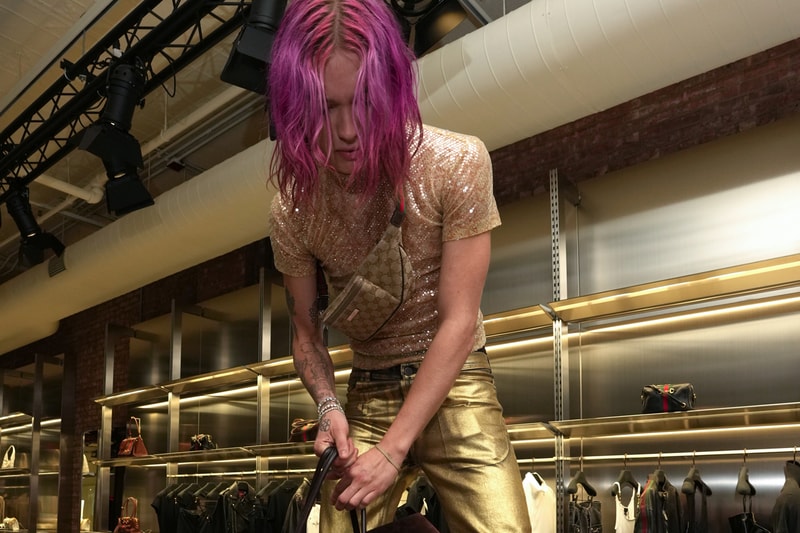
The Gucci flagship on Wooster Street in SoHo became an unlikely epicenter of cultural collision when rapper Nettspend hosted a pop-up event tied to his album "early life crisis" and Gucci's "Generation Gucci" initiative. The convergence drew crowds that blurred the traditional boundaries between high fashion retail and hip-hop grassroots culture, marking another moment in the ongoing merger of luxury brands with underground rap aesthetics.
Nettspend's presence transformed the storied Gucci location into something resembling a music venue or concert afterparty rather than a conventional boutique. Fans queued at both front and back entrances on a summer evening, attending a free meet-and-greet where the rapper signed copies of his album and posed for photographs. The event's pull reflected the genuine fan loyalty that underground hip-hop still commands, even as major luxury houses increasingly court rap artists and their audiences.
This partnership illustrates how completely the fashion industry has internalized hip-hop's cultural capital. Gucci, under creative direction that has explicitly embraced rap and streetwear aesthetics, positions itself not as a distant luxury institution but as an accessible participant in youth culture. The "Generation Gucci" framework suggests the brand views emerging artists like Nettspend not as outsiders seeking entry but as core constituents of its identity.
The dynamic also reflects how rappers navigate a transformed music industry. Nettspend used the Gucci platform to build direct relationships with supporters, turning a retail space into grassroots marketing infrastructure. For independent or underground artists, these partnerships provide visibility and legitimacy without requiring radio play or streaming dominance.
The event captures a shift that began years ago but continues to deepen. High fashion no longer waits for hip-hop to validate it. Instead, luxury brands actively embed themselves within underground communities, sponsoring events, hosting pop-ups, and aligning with artists before mainstream breakthrough. The boundary between underground authenticity and commercial polish grows hazier each season.