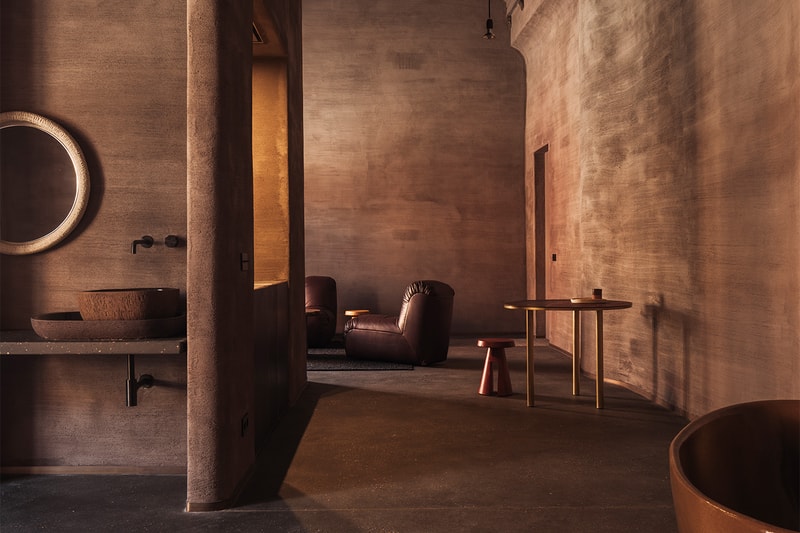
Studio LOHO has converted a historic brush factory in Bruges into Jonojé, a six-suite luxury bed-and-breakfast that functions simultaneously as a design showroom, gallery, and working studio. The 1,000-square-meter property represents the Belgian design studio's most ambitious residential project to date, merging hospitality with immersive art and craft practice.
The suites anchor themselves around monolithic clay bathtubs, handcrafted sculptures that serve as both functional fixtures and artistic statements. Studio LOHO designed each interior with organic plaster finishes and bespoke detailing, creating spaces that feel more like curated exhibitions than conventional hotel rooms. The listed building incorporates a sprawling 1,250-square-meter garden, extending the property's scope beyond typical accommodation constraints.
Jonojé occupies a liminal space within contemporary hospitality design. The project rejects the sterile luxury template that dominates high-end travel, instead positioning guests as participants in a living design ecosystem. The clay bathtubs particularly signal this philosophy. They're neither purely sculptural nor purely utilitarian, but objects that demand engagement and slow appreciation. Soaking in them becomes part of the artistic experience rather than merely functional comfort.
This hybrid model reflects broader shifts in how affluent travelers consume experiences. Properties like Jonojé capitalize on Instagram-era desires for "Instagrammable" spaces while maintaining conceptual rigor. The studio functions as both factory and exhibition hall, allowing guests to witness creative processes unfold. This transparency demarcates luxury as intellectualism and cultural participation rather than service provision alone.
The Bruges location amplifies these ambitions. Belgium's medieval architecture and thriving design community create fertile ground for experimental hospitality ventures. By revitalizing an industrial structure, Studio LOHO contributes to post-industrial tourism narratives increasingly popular across European cities. The brush factory's history now informs the property's identity, anchoring contemporary design impulses to local heritage and craft traditions.
Jonojé suggests that future luxury accommodations may increasingly blur institutional boundaries. The six suites function as display