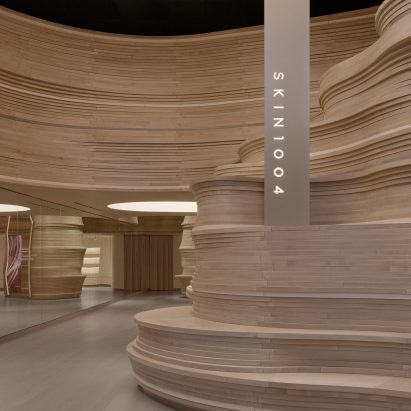
LMTLS Architecture, the New York and Seoul-based studio, has transformed the Soho flagship store for Korean skincare brand SKIN1004 by carving a dramatic wooden "gorge" through its interior. The architectural intervention channels the brand's second flagship location, following an earlier Seoul outpost, into a sculptural retail experience.
The store occupies a narrow, two-storey building typical of Manhattan's downtown architecture. Rather than fight the spatial constraints, LMTLS Architecture embraced them. The studio excavated the interior vertically, constructing steeply layered wooden planes that evoke a natural canyon formation. These wooden elements slice through the retail space, creating visual depth and movement within what would otherwise be a cramped, linear layout.
The approach reflects a broader trend in luxury retail design where architects prioritize dramatic spatial storytelling over conventional display methods. By treating the store's bones as material for sculptural intervention, LMTLS transforms shopping into a journey. Customers navigate descending and ascending wooden volumes, discovering products within this engineered landscape rather than on traditional shelving.
SKIN1004, known for its minimalist aesthetic and focus on skincare efficacy, benefits from this architectural restraint. The wooden finish complements the brand's organic positioning while the gorge-like formation suggests excavation and discovery. Product placement becomes secondary to the architectural event itself.
The Soho location marks LMTLS Architecture's expansion beyond Seoul into New York's competitive retail design market. The studio joins a growing number of architecture firms treating commercial spaces as three-dimensional art installations. Studios like Snarkitecture and Formafantasma have similarly elevated skincare and beauty retail into experiential design, suggesting that Korean beauty brands especially champion ambitious architectural partners.
LMTLS Architecture's gorge succeeds because it solves a real problem (the narrow footprint) through sculptural means, avoiding the trap of gimmickry. The wooden layers don't merely fill space. They redefine how customers perceive and move through it.