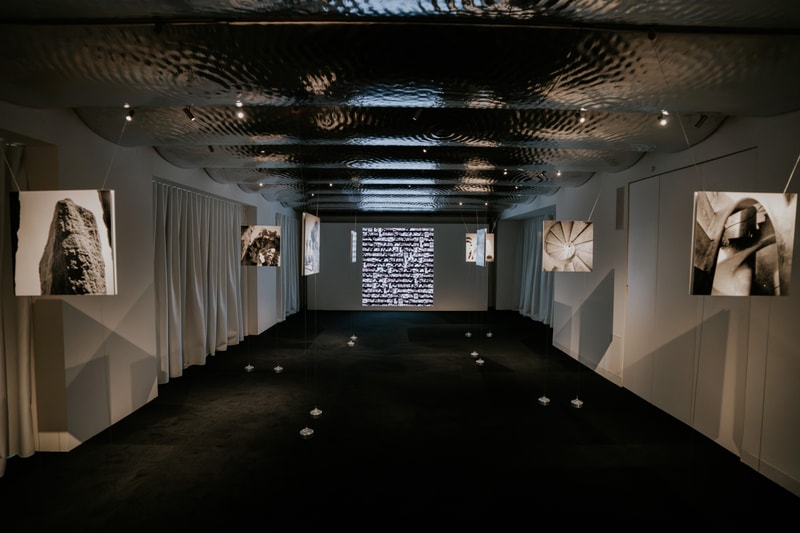
Casa Batlló, Antoni Gaudí's serpentine architectural landmark in Barcelona, opens "Gaudí-Miró-Gomis: Deconstructed" through January 2027. The exhibition pairs Joan Miró's sculptures with Gomis's photography, creating dialogue between three canonical figures of Catalan modernism and contemporary practice.
Curators Joana Seguro and Ester Ramos frame the show around digital archaeology. Tomorrow Bureau, a creative studio, employs advanced technological methods to reframe historical archives, positioning Miró and Gomis within Gaudí's own spatial vocabulary. The exhibition adds immersive regional soundscapes to anchor the visual conversation.
This collaboration between Casa Batlló Contemporary and Fundació Joan Miró reflects a broader curatorial trend: treating modernist legacies not as fixed historical objects but as living texts susceptible to reinterpretation. Miró's sculptural vocabulary speaks directly to Gaudí's organic forms. Gomis's photographic practice documents Catalan cultural life across decades, offering a temporal dimension absent from static architecture alone.
The "deconstructed" framing signals something beyond nostalgic retrospective. By deploying digital tools to excavate and remix these archives, the exhibition suggests that historical Catalan identity remains unstable, open to new readings. Tomorrow Bureau's technological interventions prevent the show from calcifying into a monument to past achievement. Instead, it treats Gaudí, Miró, and Gomis as ongoing cultural resources.
Hosting this conversation inside Gaudí's 1906 structure creates productive friction. Visitors navigate both the architect's original design logic and the curators' contemporary apparatus simultaneously. The soundscape adds another layer, refusing purely visual engagement. This multisensory approach reflects how contemporary exhibitions increasingly reject the white cube model in favor of architectural specificity and environmental immersion.
For Barcelona's cultural institutions, the partnership demonstrates how legacy artists can still generate innovative discourse. Rather than preserving Miró and Gomis in amber,