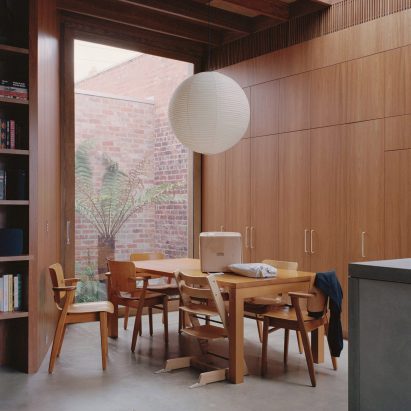
Dezeen's latest design lookbook celebrates eight residential projects that harness pocket gardens and mini courtyards to flood compact homes with natural light and views of greenery. These small outdoor spaces, whether squeezed into corner lots or positioned at the heart of a dwelling, transform underutilized areas into moments of respite within constrained urban and suburban footprints.
The curated collection demonstrates how architects and designers approach the challenge of bringing nature indoors without requiring sprawling land. Pocket gardens function as visual anchors, drawing daylight through windows and glass doors while creating psychological breaks from interior living. Mini courtyards perform similar work, often serving as light wells that penetrate deep into otherwise dark floor plans.
This design strategy responds to contemporary housing constraints. As property sizes shrink and density increases, architects must maximize every square meter. Rather than accepting dim interiors as inevitable, leading practices treat outdoor voids as essential program. A well-placed courtyard or pocket garden becomes infrastructure for wellness, not luxury.
The lookbook reflects broader shifts in residential design thinking. European and Asian precedents, from Amsterdam's narrow townhouses to Tokyo's compact dwellings, have long embedded small courtyards into their DNA. North American and British designers increasingly adopt similar approaches as climate consciousness and urban planning realities converge.
Dezeen's presentation joins a larger conversation about biophilic design. Research confirms that views of nature reduce stress and improve cognitive function. For residents without access to parks or gardens, even a modest courtyard visible from the kitchen or bedroom delivers measurable benefits.
The featured projects represent various typologies and budgets, suggesting pocket gardens function across economic spectrums. Some incorporate water features or planted beds. Others operate purely as borrowed-light devices, framing sky and vegetation. All affirm that thoughtful spatial planning transforms limitations into opportunities.