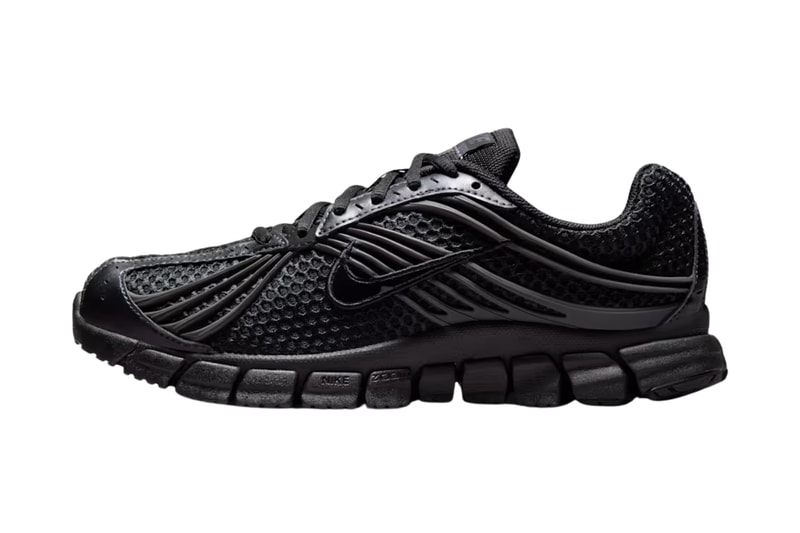
Nike resurrects its Zoom Skylon 11, a late-2000s running silhouette, with a new "Black/Anthracite" colorway arriving now at $135. The release follows a neon "Volt" variant, continuing the brand's mining of Y2K athletic aesthetics for contemporary sneaker culture.
The Zoom Skylon 11 pairs a breathable mesh upper with structured synthetic leather overlays, constructing a lightweight supportive cage around the foot. The minimal monochromatic palette trades the earlier volt iteration's flash for subdued versatility, appealing to consumers seeking understated technical footwear rather than statement pieces.
This pattern reflects Nike's broader strategy of excavating dormant silhouettes from its sprawling archive. The sportswear giant operates as both curator and nostalgia merchant, betting that sneaker enthusiasts will gravitate toward authentic throwback designs alongside contemporary innovations. The Zoom Skylon 11's original run in the late 2000s positions it as genuine heritage, not invented retroism.
The SKU IU7360-002 designation signals Nike's systematic approach to colorway proliferation. Where a single shoe model might have launched in two or three variations historically, today's release calendar favors incremental drops across multiple palettes. This Black/Anthracite offering occupies the practical middle ground between eye-catching accents and neutral versatility.
Sneaker culture's appetite for running-inspired designs over pure lifestyle shoes has intensified since the early 2020s. Brands recognize that technical specifications matter as much as visual identity now. The Zoom Skylon 11's emphasis on mesh construction and supportive overlays signals genuine functional design rather than aesthetic borrowing alone.
Hypebeast's coverage positions the release within the broader sneaker release calendar, where timing and colorway sequencing shape collector demand. The "Black/Anthracite" palette arrives as a stabilizing follow-up to the bolder "Volt" debut, allowing Nike to test market penetration across different consumer segments. Early availability suggests no artificial scarcity