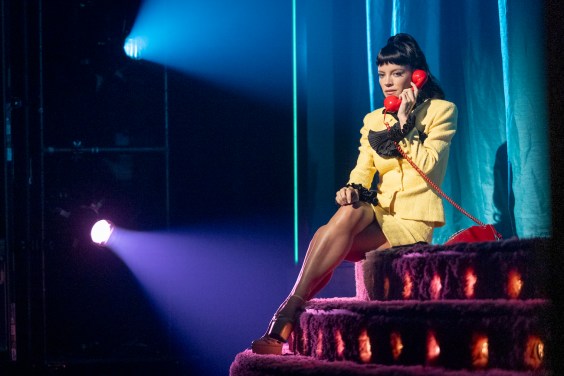
Lily Allen has scaled back her fall American tour, moving performances from arenas to theaters. The downsizing comes after she brought her spring tour supporting "West End Girl," a concept album examining her marriage's collapse, to theaters across the country. Allen had planned to expand to larger venues this September but has since revised those expectations.
"West End Girl" marked a significant artistic statement for Allen, blending personal narrative with musical storytelling. The album traces intimate terrain, transforming private dissolution into public art. By touring theaters in the spring, Allen established a direct relationship with audiences in a more conversational setting, which proved effective for the album's introspective material.
The shift from arena capacity back to theater-sized venues reflects a recalibration common in the touring industry. Artists often adjust routing based on ticket sales, audience demand in specific markets, and the nature of the material. For a concept album as emotionally granular as "West End Girl," the theater setting may actually serve the work better than arena acoustics and distance would allow.
Allen's career has moved through several phases. From her early 2000s pop-rap success with "LDN" and "Smile," she evolved into a more introspective songwriter. "West End Girl" represents another chapter in that trajectory, one where vulnerability and specificity drive the work rather than mainstream radio accessibility.
The downsizing also signals broader touring realities in the post-pandemic music landscape. Artist routing decisions now reflect not just popularity metrics but also precise market analysis. A theater tour allows for more intimate performances while maintaining economic viability across different regions.
Allen's commitment to touring "West End Girl" across multiple legs demonstrates her investment in the album's narrative. The adjustment from arenas to theaters preserves the connection between artist and audience that the album's subject matter demands.