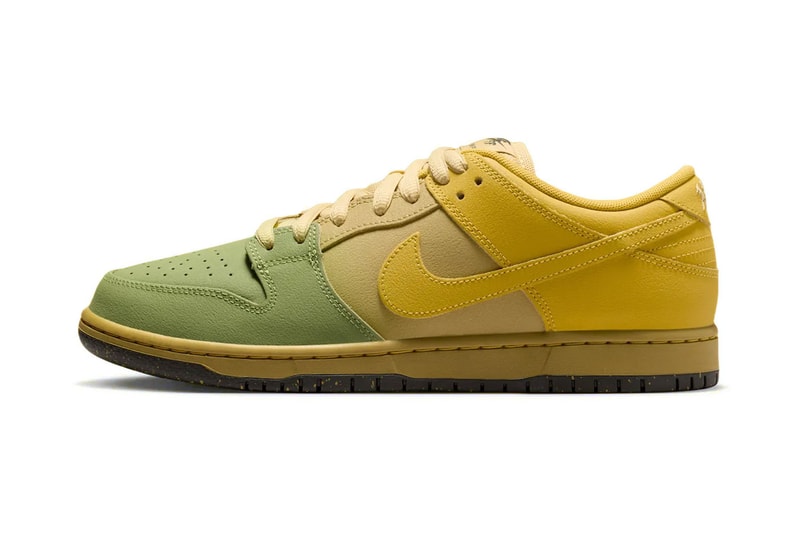
Nike's skateboarding division has unveiled the SB Dunk Low "Saffron Quartz," a Fall 2026 release that pairs warm citrus tones with unexpected design flourishes rooted in metallurgical imagery. The sneaker combines a buttery Saffron Quartz yellow base with pear green accents across the upper, creating a palette that straddles playful minimalism and bold statement dressing.
The details reveal deeper conceptual layers. Nike embedded pyrotechnic and heavy metal references into the heel construction and graphic sockliners, suggesting a narrative arc from industrial aesthetics to street wear functionality. This layering strategy reflects how skateboarding footwear increasingly functions as wearable storytelling, where colorway names and hidden design elements reward close inspection from collectors and enthusiasts alike.
Priced at $130 USD with the SKU IR1940-800, this sneaker enters Nike's general-release pipeline rather than dropping as a limited collaboration or specialty store exclusive. This positioning matters within the contemporary sneaker market, where accessibility has become its own form of cultural capital. The SB Dunk Low remains one of the most resilient silhouettes in Nike's portfolio, having survived multiple cycles of sneaker trends while maintaining credibility across skating communities and fashion-forward consumers.
The "Saffron Quartz" colorway addresses a consistent demand from the brand's core audience: vibrant, wearable options that avoid the grayscale fatigue dominating contemporary sneaker design. The pear green secondary color prevents the yellow from reading as purely cheerful, introducing a sophisticated tension that feels contemporary rather than novelty-driven.
This release continues Nike SB's strategy of leveraging color innovation to maintain relevance within a increasingly crowded skateboarding footwear market. As the brand approaches Fall 2026, such releases signal Nike's confidence in the SB Dunk Low's staying power and its willingness to take chromatic risks with a silhouette that has already proven its commercial viability across multiple design iterations.