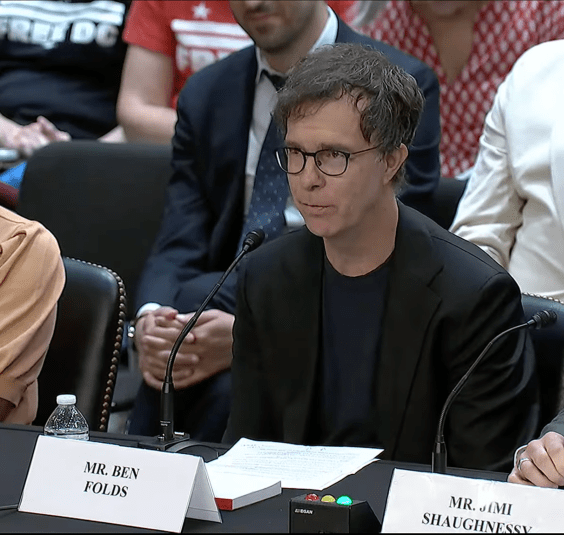
Ben Folds stepped into the political arena this week, testifying before Congress about the Trump administration's control of the Kennedy Center. The pianist and composer resigned as the National Symphony Orchestra's Artistic Advisor over the takeover and has now escalated his public criticism by appearing at a bicameral congressional hearing chaired by Senator Richard Blumenthal (D-CT).
The hearing, titled "Monumental Waste: How Donald Trump Is Spending Millions Destroying American Landmarks," gave Folds a platform to articulate his core concern: that politicizing art institutions corrupts their fundamental purpose. "I think most of us understand that when you politicize art, you've got propaganda," Folds testified, distilling his objection to a clear philosophical principle.
Folds' appearance represents a rare moment when a musician of his stature translates artistic grievance into direct congressional action. The Kennedy Center, America's flagship performing arts institution, occupies symbolic weight in the nation's cultural landscape. Its mission centers on artistic merit and cultural accessibility, not partisan politics. By testifying, Folds elevated concerns about institutional integrity beyond the usual arts-world commentary into the legislative record.
The pianist's decision to resign rather than accept the new administration's direction carried personal cost. As Artistic Advisor to the NSO, Folds held considerable influence over one of the country's most prestigious orchestras. His resignation signaled that some cultural leaders refuse compromise on institutional autonomy, even when facing powerful institutional pressure.
This testimony also reflects broader anxiety within the arts community about government control over cultural institutions. When political leaders reshape the boards, budgets, and missions of prestigious venues, the stakes transcend administrative concerns. The question of who controls America's cultural infrastructure shapes what stories get told, which artists get supported, and whether art can remain a space for independent expression or becomes merely another extension of state power.