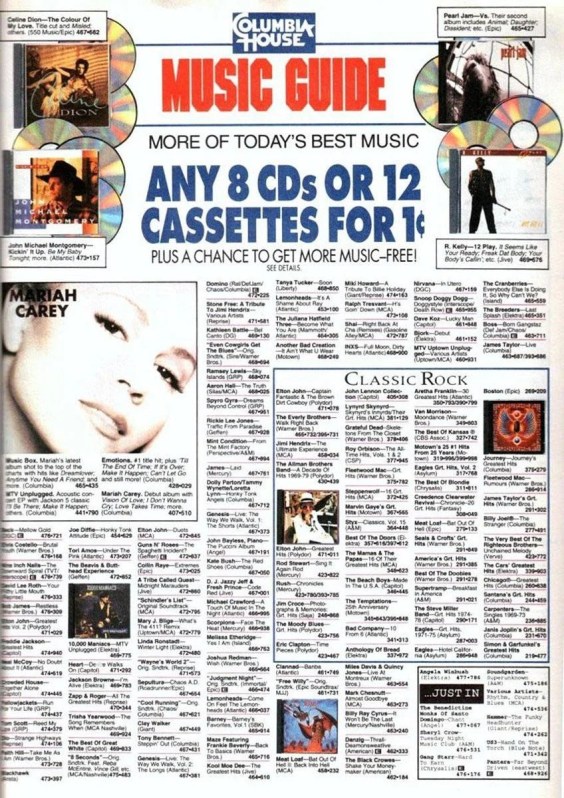
Columbia House, the mail-order media club that shaped how Americans acquired music and films for seven decades, is closing its doors next month after 71 years in operation. The announcement came via YouTube channel Channel 33 RPM and tech news site Cord Cutters News, confirming what seemed inevitable in an era of streaming dominance.
The company's longevity itself qualifies as surprising. Columbia House persisted well into 2026, long after digital distribution had decimated physical media sales. The service, which launched in 1955, pioneered the subscription-based media model decades before Netflix and Spotify arrived. Members received discounted CDs, DVDs, and vinyl records through monthly shipments, often with introductory offers that hooked generations of consumers.
The business model thrived throughout the 1980s and 1990s, when buying music and movies required physical media. Columbia House became a cultural institution, its advertisements ubiquitous in magazine pages and late-night television. The club offered access to entertainment at a time when retail prices felt prohibitive for casual consumers.
Streaming services rendered this advantage obsolete. Once Netflix and Spotify made entire catalogs instantly accessible for monthly fees, mail-order collections became relics. The shift accelerated throughout the 2010s as internet infrastructure improved and younger consumers abandoned physical formats entirely.
Columbia House's persistence into 2026 suggests a stubborn customer base unwilling to abandon tangible media or the tactile ritual of receiving packages. Some consumers valued owning rather than licensing content, a principle that gained renewed attention as concerns about streaming service cancellations mounted.
The shutdown marks the end of an era in music and film distribution. Columbia House adapted less successfully than its competitors to digital disruption. Record stores closed first. Big box retailers relegated media sections to closets. Columbia House simply continued until continuation no longer made financial sense.