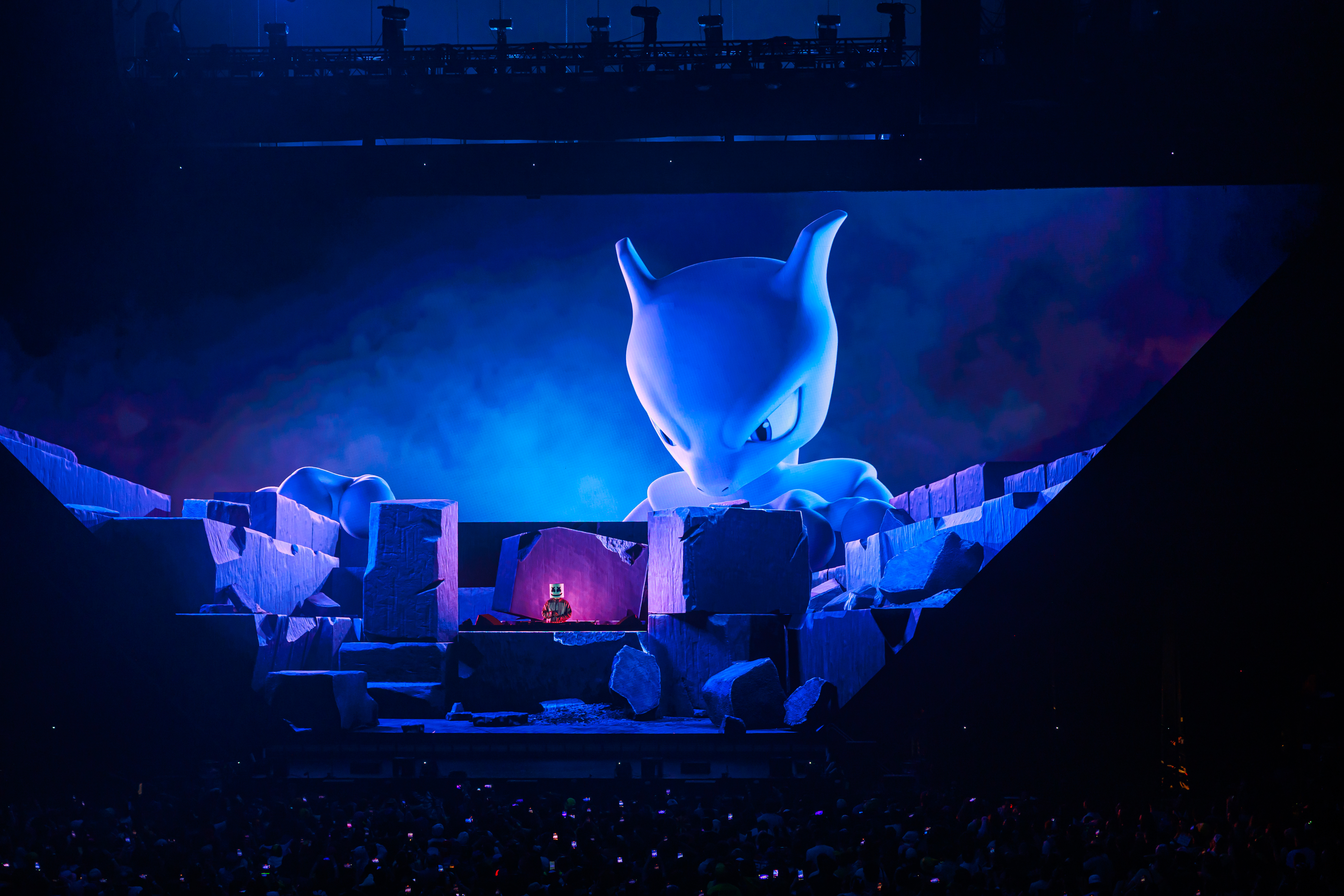
Pokémon's three-decade run reached a new cultural milestone last Saturday when the franchise pivoted sharply into electronic dance music territory. The 30th anniversary celebration, dubbed Pokémon Night Out, transformed Los Angeles's Intuit Dome into a hybrid venue where nostalgic gaming fandom collided with modern festival culture. DJs Marshmello and Alison Wonderland anchored the event, layering Pokémon imagery and battle sequences across lasers, pyrotechnics, and elaborate visual production typically reserved for major EDM festivals.
The concert represented a calculated bid to expand Pokémon's aging fanbase. Since its 1996 debut, the franchise has survived several identity crises by aggressively chasing new demographic entry points. This EDM approach targets millennials and Gen Z listeners who grew up catching Pikachu on Game Boy but now inhabit nightclub and festival spaces. Marshmello's mainstream credibility matters here. The masked DJ has built a career on accessible crossovers, collaborating with artists from The Chainsmokers to Juice WRLD. Pairing him with Alison Wonderland, an Australian electronic artist with strong underground credentials, signaled that Pokémon wanted both mainstream accessibility and street credibility.
The event itself functioned as a multimedia spectacle. Concert footage suggests the production team embedded Pokémon battles, creature animations, and franchise iconography directly into the visual display. Pyrotechnics and laser work created the sensory overload expected at major EDM gatherings like Coachella or Ultra, while maintaining Pokémon's cartoonish aesthetic. This layering served a dual purpose: entertaining existing fans who paid for tickets while generating social media content that reaches vastly larger audiences.
Intuit Dome's selection matters. The venue, which opened in 2024 as home to the Los Angeles Clippers and entertainers like Billie Eilish, represents cutting-edge live entertainment infrastructure. Its advanced lighting and visual capabilities positioned it perfectly for a hybrid gaming-music event. The choice also anchors Pokémon firmly in Los Angeles, entertainment's epicenter, signaling the franchise's continued cultural weight.
The concert joins a broader pattern in how established intellectual property increasingly treats music as narrative extension rather than peripheral tie-in. Game of Thrones live orchestral tours, Marvel soundtrack experiences, and Nintendo concert series have all blurred lines between fandom celebration and premium entertainment product. Pokémon's EDM approach extends this model by literally remixing the franchise's audio DNA into contemporary club music.
Marshmello's involvement carried particular weight. His previous collaborations span gaming, anime, and mainstream pop, making him a natural translator between worlds. His willingness to spend a full evening inside Pokémon's universe suggested the collaboration emerged from genuine enthusiasm rather than pure commerce, even if commercial success drove the booking.
The Pokémon Company has not announced whether Pokémon Night Out will become an annual festival or launch in additional cities. Given the Intuit Dome event's apparent success, expansion seems likely. A touring version could easily move between major venues, generating revenue while deepening connections between gaming and music culture. The anniversary concert ultimately demonstrated that Pokémon has successfully evolved beyond its original handheld gaming origins. At thirty years old, the franchise continues trading old identities for new ones, staying culturally relevant through calculated fusion with whatever medium currently dominates youth attention.