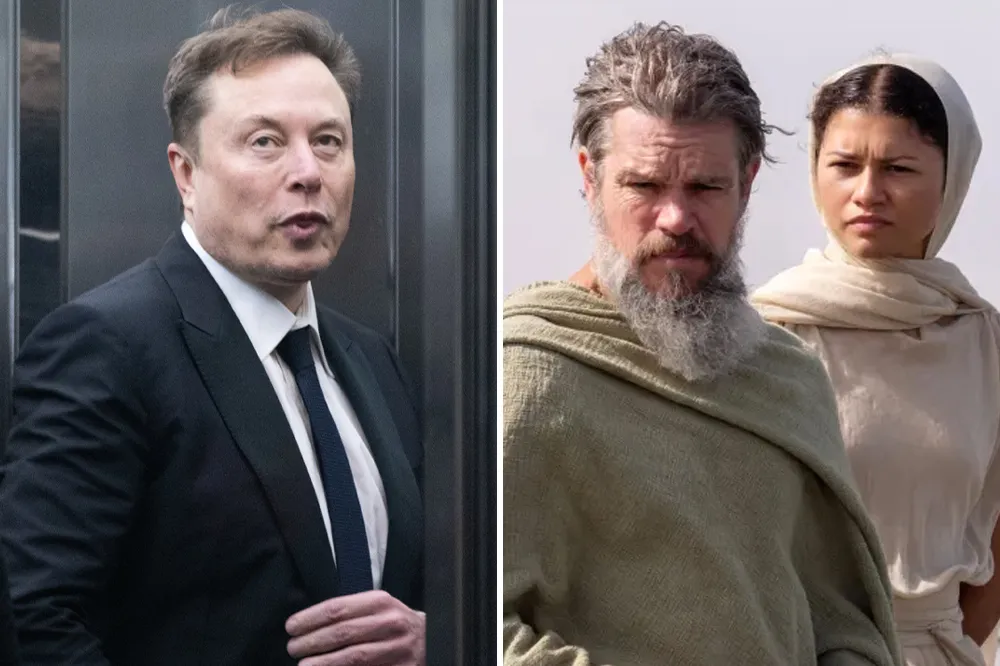
Elon Musk's xAI has released the first AI-generated episode of Homer's "The Odyssey," delivering a partial answer to months-old promises of a full-length, feature-film adaptation powered entirely by artificial intelligence. The 7-minute episode debuted Friday on X, xAI's parent platform, with the company framing the project as a "creative collaboration."
The release marks a curious midpoint between ambition and execution. Musk initially pledged that Grok Imagine, xAI's image and video generation tool, would produce a "historically accurate" feature-length film based on the ancient Greek epic. That promise carried the usual Musk swagger. Instead, xAI has started with a serialized approach, releasing what amounts to a short-form episode rather than theatrical-length content. The gap between the promise and the present suggests either a recalibration of scope or a more measured rollout than initially advertised.
The project taps into a broader obsession within Silicon Valley: using AI to automate creative production at scale. Grok Imagine competes directly with other generative video tools like OpenAI's Sora and Runway, all racing to demonstrate that machines can now handle storytelling tasks once reserved for directors, cinematographers, and production designers. The "Odyssey" experiment serves as both technical showcase and cultural commentary. Homer's work spans millennia of human civilization and remains foundational to Western literature. Using AI to reimagine it invites questions about whether algorithms can capture narrative texture, visual coherence, and emotional resonance across a full-length work.
The phrase "historically accurate" from Musk's original claim deserves scrutiny. "The Odyssey" exists as ancient myth, not documentary history. Its "accuracy" depends entirely on interpretive choices about everything from costume design to naval vessel construction to mythological creature visualization. An AI system trained on existing images and video inherits those same interpretive biases, merely automating them. The project doesn't solve the problem of adaptation. It outsources it to machine learning patterns.
The xAI release comes amid intensifying competition in generative video. OpenAI's Sora demonstrated text-to-video generation at scale in February 2024. Runway has released multiple generations of its Gen-3 tool, focusing on coherence and length. Google's Gemini 2.0 includes video capabilities. The market race centers on a single metric: how long can these systems generate continuous, coherent visual content? A feature film typically runs 90 to 120 minutes. Seven minutes represents roughly 6 percent of that runtime.
xAI's partial delivery raises practical questions. Will the remaining episodes arrive weekly, monthly, or sporadic? Does the company plan to eventually stitch these segments into a full film? How will viewers experience narrative continuity across AI-generated sequences, particularly given current limitations in maintaining character consistency across long-form generation?
The project also reflects xAI's broader strategy of integrating Grok across X's ecosystem. Using "The Odyssey" as a proof-of-concept means the company can market Grok's creative capabilities to enterprises, filmmakers, and media companies. If successful, it becomes a case study. If the remaining episodes reveal visual inconsistencies, logical gaps, or narrative collapse, it becomes a cautionary tale about AI's current creative ceiling.
For now, the 7-minute episode functions as a technical demonstration rather than a complete artistic statement. Whether Musk and xAI can sustain quality across a full-length adaptation remains the open question.