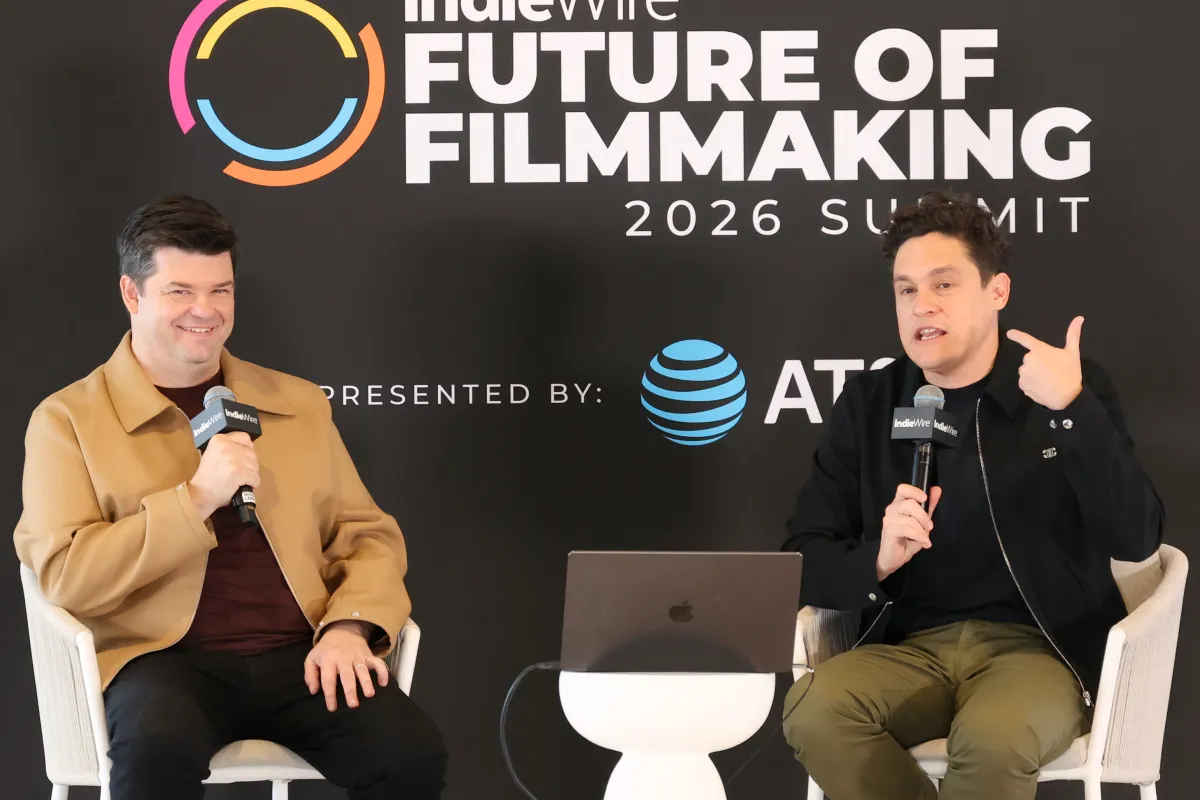
# Directors Phil Lord and Chris Miller Discuss the Craft Behind 'Project Hail Mary' at Industry Summit
Phil Lord and Chris Miller used their keynote at IndieWire's Future of Filmmaking Summit in Los Angeles to pull back the curtain on the meticulous craftsmanship that goes into modern blockbuster filmmaking. The co-directors walked through the production of their latest project, offering audiences an intimate look at decision-making processes that rarely reach public discussion.
The pair spent considerable time detailing the puppetry work embedded in "Project Hail Mary," a film that relies heavily on practical effects and creature design to bring an alien character to life. Rather than defaulting to full CGI, Lord and Miller opted for a hybrid approach that combines traditional puppet work with digital enhancement. This choice reflects a broader industry trend where directors are increasingly rejecting pure digital solutions in favor of tactile, physically present elements that actors can interact with on set. The tactile approach changes everything for performers, who respond differently when working with an object in the room rather than tennis balls on sticks.
The directors also highlighted an unexpected moment involving actress Sandra Hüller and a karaoke performance, suggesting that character development and emotional authenticity sometimes emerge from moments that exist outside the traditional scripted framework. This anecdote points to how Lord and Miller operate as directors who remain responsive to spontaneous creative opportunities during production.
Perhaps most revealing was their discussion around making audiences emotionally invested in inanimate objects. The phrase "cry about a rock" encapsulates a creative challenge that many filmmakers face but few discuss publicly. The implication here is that "Project Hail Mary" contains moments designed to generate genuine emotional responses to something that exists primarily as a visual or narrative construct. This speaks to the craft of visual storytelling, cinematography, and narrative construction working in concert to manipulate audience emotion through purely cinematic means.
Lord and Miller have built a career oscillating between animated work at studios like Disney and Sony, where they directed the "Jump Street" films and the "Spider-Man: Across the Spider-Verse" franchise, and live-action projects. This range gives them credibility across multiple filmmaking disciplines. Their willingness to share production methodology at industry conferences reflects a broader shift in how contemporary directors view knowledge-sharing. The IndieWire summit functions as both professional education and marketing platform, allowing filmmakers to cement their reputation as serious craftspeople while generating buzz for upcoming releases.
The Future of Filmmaking Summit represents the kind of industry convening that has become increasingly central to film culture. These gatherings allow working directors to position their creative choices within larger conversations about technological innovation, narrative technique, and audience psychology. For emerging filmmakers in attendance, watching established directors like Lord and Miller articulate their process offers concrete examples of how to solve creative problems at scale.
The emphasis on puppetry over pure digital work, the integration of spontaneous performance moments, and the philosophical challenge of generating emotion around non-human subjects reveal directors thinking carefully about the relationship between filmmaking technique and emotional resonance.