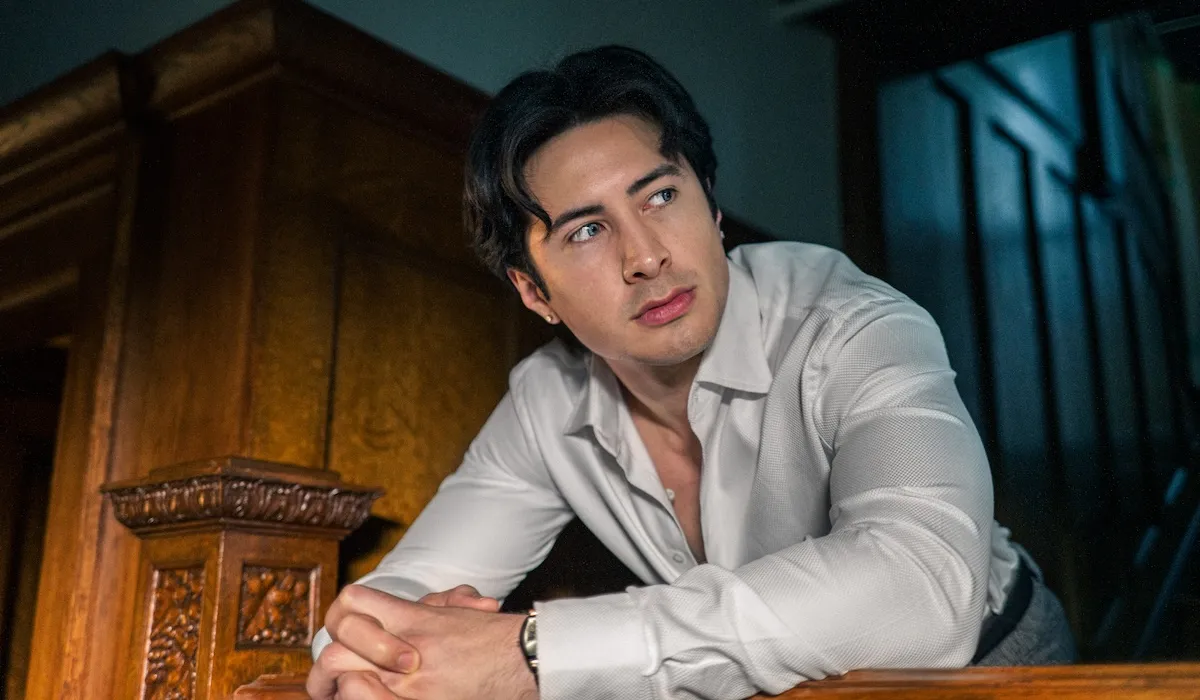
Kat Sandler's "Yaga" arrives on AMC+ as an adaptation of her own stage play, transposing the folkloric terror of Baba Yaga into contemporary crime procedural territory. Hudson Williams carries the series in a dual role, playing both a beat cop and a private investigator navigating a fog-shrouded coastal town while hunting for a wealthy family's vanished heir. The premise promises atmosphere and dread. The execution falls short.
The series attempts to channel the menace embedded in the original Baba Yaga mythology, the fearsome figure from Slavic folklore who devours travelers and transforms human bone into architectural material. Sandler's stage play, which preceded this television adaptation, laid groundwork for exploring that ancient malevolence through a modern lens. Translating it to the screen, however, strips away much of the psychological claustrophobia that made the theatrical version work. The misty setting and missing heir plot feel undercooked for a mystery that demands genuine unease.
Williams' performance demonstrates range across his dual roles. The challenge lies not in his acting but in what the script asks of him. Playing two distinct characters investigating the same disappearance offers conceptual intrigue but requires narrative scaffolding that "Yaga" doesn't quite construct. The characters inhabit separate investigative timelines, which should create dramatic tension through divergent perspectives. Instead, the structure feels obligatory rather than earned.
The central mystery itself presents problems. A wealthy family's heir goes missing in a town with obvious secrets and supernatural undertones. That setup invites comparisons to prestige television mysteries like "True Detective" or "Sharp Objects," where atmosphere becomes a character unto itself. "Yaga" assembles the ingredients for that kind of show. The coastal setting, the fog, the hints of ancient magic lurking beneath suburban normalcy, all promise something unsettling. But the series doesn't commit fully to horror or mystery. It hovers between genres without committing to the specific tonal DNA that makes either work.
The problem centers on stakes. Viewers need to feel the weight of what's missing and why it matters. The heir's absence should radiate consequence. Instead, the investigation meanders through exposition and dialogue-heavy scenes that explain the mythology without enacting it. Effective horror adapted from folklore requires showing the danger, not merely talking around it. "Yaga" relies too heavily on the latter approach.
Sandler's theatrical instincts, which served the play well in intimate performance spaces, don't fully translate to television's wider frame. Stage productions tolerate exposition and talky scenes more readily. They compensate with immediate presence and proximity between actor and audience. Television demands tighter pacing and visual storytelling to maintain that same tension. The adaptation preserves too much of the play's rhythms.
AMC+ has positioned "Yaga" as part of its push into genre television, alongside supernatural and crime-oriented programming that attracts prestige television audiences. The platform's strategy targets viewers fatigued by conventional procedurals. But "Yaga" doesn't satisfy either constituency. It's neither creepy enough for horror enthusiasts nor sufficiently complex for mystery aficionados.
Williams' committed work in both roles deserves better material. The Baba Yaga mythology deserves better too. This adaptation settles for atmospheric window dressing rather than substantive dread.