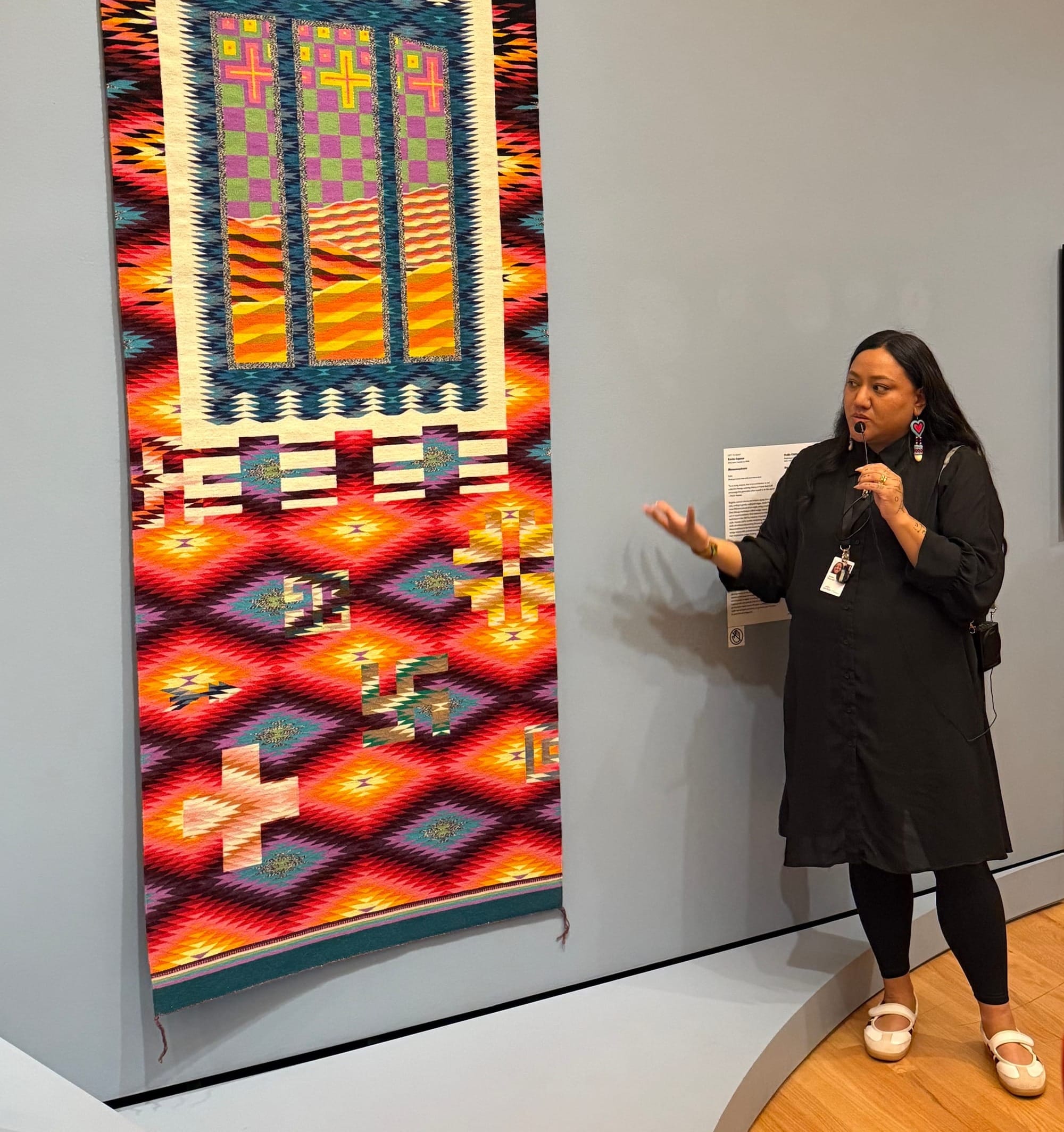
Jordan Poorman Cocker, a Kiowa and Tongan citizen, opened a two-day symposium on contemporary Native art at the Crystal Bridges Museum of American Art in Bentonville, Arkansas on October 16 and 17. Poorman Cocker serves as the museum's Native American Graves Protection and Repatriation Act officer and first full-time curator of Indigenous art, a position she took in 2023.
The symposium coincided with a reinstallation of contemporary Native art that Poorman Cocker spearheaded with Ashley Holland, a Cherokee Nation member. The reinstallation aims to showcase the diversity of style, medium, and living Native artists across Indian Country, including works by citizens of ancestral tribes in Arkansas.
Speakers at the two-day gathering included Choctaw and Cherokee artist Jeffrey Gibson, who delivered a keynote address and later beaded while speaking with Poorman Cocker. Diné weaver Melissa Cody discussed the lineage of her work in dialogue with her mother Lola Cody. Lehuauakea led a workshop based in her traditional kapa practice.
Poorman Cocker studied museum studies at Victoria University of Wellington in New Zealand. Her curatorial practice draws on what she describes as a global spirit of Indigeneity that rejects the divisive borders of colonial nation-states. She cited the 2019 exhibition "Hearts of Our People: Native Women Artists" at the Minneapolis Institute of Art as a major source of inspiration.
Poorman Cocker is also a beadwork and textile artist rooted in Kiowa and Tongan conventions. Indigenous and Native art makes up about 3% of Crystal Bridges's permanent collection, according to Poorman Cocker. She noted that the museum sector writ large has a long way to go to better present Indigenous artists and stories.