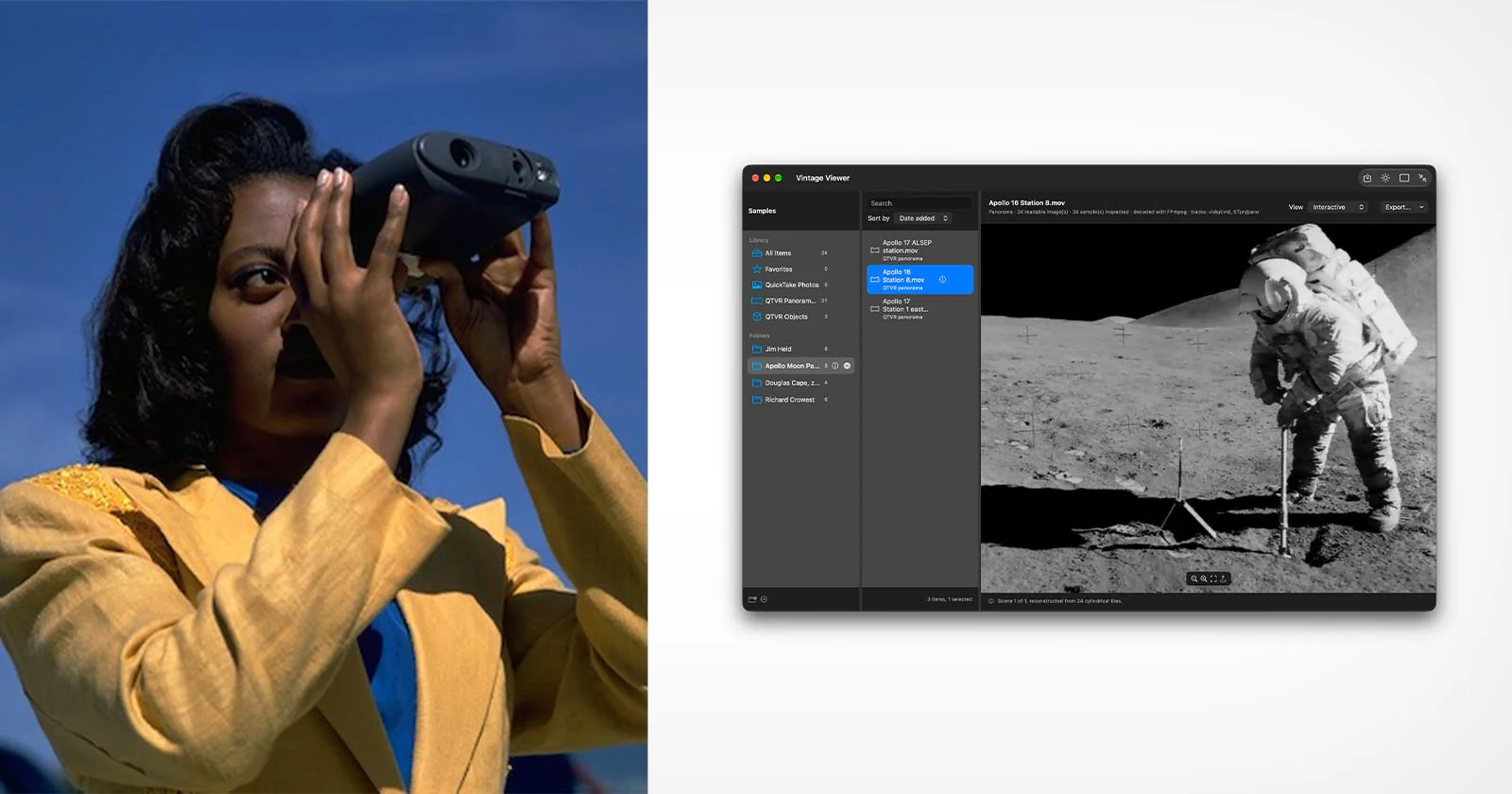
When Steve Jobs returned to Apple in 1997, he eliminated 70 percent of the company's product line, cutting QuickTake cameras and abandoning QuickTime VR, technologies that defined early digital photography and interactive panoramas.
QuickTake, Apple's 1994 digital camera, produced fuzzy, compressed images that hinted at a filmless future. By early 1997, Apple had discontinued the entire camera line. QuickTime VR, launched in 1995, let photographers create 360-degree panoramas viewers could navigate with a mouse. The technology enchanted both amateurs and professionals. Museums and publishers created virtual exhibits. NBC News published crime scene panoramas during the O.J. Simpson trial. Architects used it for walkthroughs. Between 1997 and 2001, a worldwide project called A Wrinkle in Time had QuickTime VR photographers shoot panoramas at equinoxes and solstices, publishing their work on the web.
The formats faded as the web evolved. Browser plug-ins became obsolete, replaced by HTML standards. Apple never developed an OS X version of its QuickTime VR Authoring Studio. When macOS Catalina arrived in 2019 and dropped 32-bit support, QuickTime Player 7 stopped running. QuickTake photos became unreadable when Classic, the compatibility layer for older Mac software, vanished in 2007.
Many thousands of QuickTime VR movies survive on old websites and the Internet Archive but cannot be viewed in modern browsers or current QuickTime Player versions. The formats ended up in what the author calls "the file-format dustbin." Apple could have continued supporting both formats or adapted them for modern systems, the author notes, but maintaining software for a small market ultimately did not justify the expense.