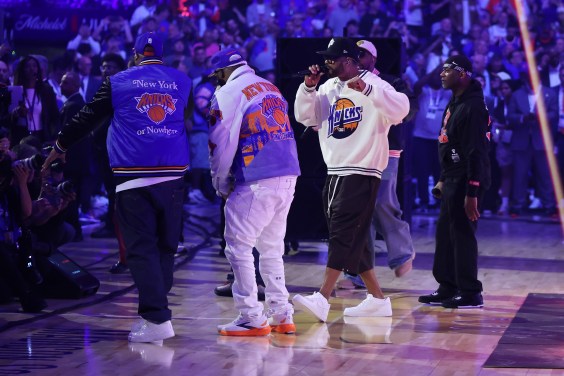
Wu-Tang Clan took the Madison Square Garden court at halftime of last night's NBA Finals game, delivering a performance that preceded the New York Knicks' historic comeback victory. The legendary hip-hop group, native to Staten Island and forever linked to the city's basketball culture, performed for thousands of fans as the Knicks faced a significant deficit heading into the second half.
What followed was remarkable. The Knicks mounted the greatest comeback in NBA Finals history, erasing their halftime deficit to secure an unlikely win. Whether the Wu-Tang performance served as genuine inspiration or merely coincidental timing remains open to interpretation, but the sequence sparked immediate speculation among fans and commentators about the cultural power of the group's presence.
Wu-Tang Clan's connection to New York basketball runs deep. The group emerged from Queens and Staten Island in the 1990s during the Knicks' own peak years, when Patrick Ewing and his teammates made their Finals runs. That era cemented hip-hop and basketball as intertwined elements of New York identity. Bringing Wu-Tang back to MSG for a Finals game represented a symbolic return to that moment of shared civic pride.
The timing proved potent. A group that built its legacy on grit, determination, and collective power performing while their hometown team faced elimination created the kind of narrative moment sports thrives on. Whether the Knicks players felt genuinely energized by "C.R.E.A.M." and "Bring Da Ruckus" or simply played better basketball remains unknowable. But in New York culture, where hip-hop and hoops have always reinforced each other, the symbolic resonance mattered as much as any practical effect.
The comeback victory and Wu-Tang's halftime appearance now exist as a single story in Knicks lore. That fusion of music, basketball, and New York identity is exactly the kind of moment both worlds live for.